Top 10 Mobile Desk Manufacturers for Global Buyers
A Mobile Desk can look simple in a product photo. In daily use, the details decide whether it works: wheel locks, frame stability, height adjustment, and enough space for a laptop and notes. Buyers comparing manufacturers also need to check load ratings, materials, customization options, warranty terms, and delivery support. Those details are easy to miss when a catalog emphasizes finish and price.
Ergonomics researcher Dr. Alan Hedge’s work offers a useful principle, paraphrased here: “A workstation should support movement, not hold a person in one posture.” That matters for mobile desks used in clinics, classrooms, offices, and shared work areas. A desk that rolls smoothly across carpet may behave differently on hard flooring. Small details matter. This guide introduces ten manufacturers for global buyers, with attention to product range, build quality, and practical purchasing considerations. Company capabilities and specifications can change, so buyers should confirm current details directly. The list is a starting point, not a final verdict. Some comparisons may remain imperfect; product data is not always presented consistently. A careful buyer should ask for dimensions, caster specifications, and clear warranty documentation before choosing. The right Mobile Desk is not simply the cheapest or most adjustable. It is the one that fits the user, the room, and the work.
Mobile Desks in Context: The $59.8B Global Office-Furniture Market in 2023
The global office-furniture market reached an estimated $59.8 billion in 2023. Mobile desks occupy only one part of this broad market, alongside chairs, storage, and fixed workstations. Still, their role is becoming easier to understand: offices need layouts that can change as teams, tasks, and available space shift. A desk on casters can move from a shared project area to a quiet corner without requiring a full room redesign.
That flexibility has practical limits. Buyers should examine wheel quality, frame stability, height adjustment, and the surface area available for a laptop, notes, and a drink. A narrow top may look efficient in a showroom but feel cramped after a full workday. Small details matter. Locking casters and rounded edges can also affect everyday usability, especially in busy rooms.
The market figure offers context, not a guarantee of demand for every product type. Regional budgets, workplace habits, and shipping requirements can shape purchasing decisions differently. Global buyers comparing manufacturers should request clear specifications and sample units where possible, then assess the desk under realistic conditions. Even then, a single test may miss problems that appear after months of use. That uncertainty deserves more attention than glossy product photography.
Mobile Desk Types, Applications, and Core Design Features
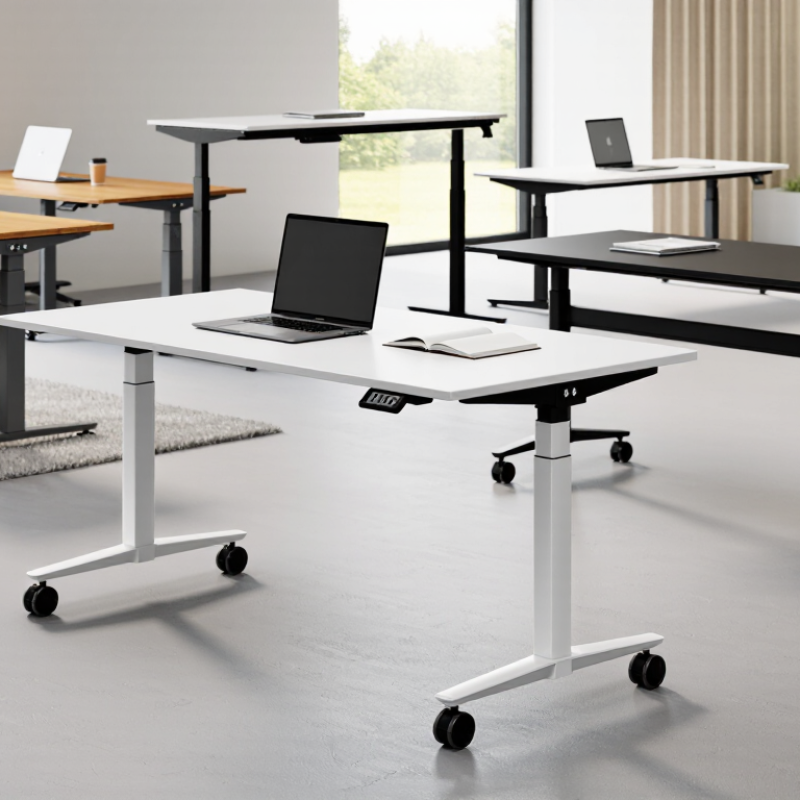
Mobile desks include rolling laptop tables, height-adjustable sit-stand units, compact bedside desks, and folding workstations. Each suits a different setting. A rolling table can move between a sofa and a meeting room, while a folding desk fits temporary work areas. Small wheels matter. Locking casters help prevent drift on smooth floors, though they may catch on thick rugs.
In offices, clinics, classrooms, and shared workspaces, mobility supports changing tasks and users. A height-adjustable model can accommodate seated or standing work, but its range should match the people using it. Check the load rating with a laptop, monitor, and accessories in place. A narrow base saves space, yet may feel less stable when the desktop is extended. That trade-off is easy to miss.
Useful design features include a sturdy frame, rounded edges, cable openings, and a wipe-clean surface. Look for smooth height controls and wheels that turn without scraping. Test the desk on the actual floor, not only in a showroom. Small details matter. Some compact models wobble when leaned on; this deserves attention before purchase. Measure doorways, chair clearance, and storage space, then compare them with the desk’s footprint. A practical choice is not always the most attractive one.
Manufacturer Evaluation: ANSI/BIFMA X5.5-2021 Desk and Table Standard
When comparing mobile desk manufacturers, treat ANSI/BIFMA X5.5-2021 as a useful benchmark, not a marketing badge. It sets performance requirements for desk and table products, including strength, stability, and durability. Ask which exact model and configuration were evaluated. A report for a fixed desk may not represent a rolling model with different legs, casters, or a wider top. Details matter.
Tips: Request the complete test report, its date, and the tested model’s dimensions. Check whether the report covers the same caster type, locking mechanism, and accessories offered in your quotation. Ask how production units are kept consistent with the tested sample. A brief answer is not enough. A neat specification sheet can still leave important gaps.
For practical evaluation, inspect the frame joints and caster locks, then roll a sample across a hard floor and a low-pile carpet. Test the desk at its intended working height, with an ordinary load placed near the edge. Note wobble, unintended movement, or difficult adjustments. These observations do not replace standardized testing, but they can reveal issues worth discussing. I would also verify that the supplier can trace the report to the product being purchased; paperwork alone is not proof of identical construction.
Top 10 Mobile Desk Manufacturers for Global Buyers — Manufacturer Evaluation: ANSI/BIFMA X5.5-2021 Desk and Table Standard
Illustrative buyer-evaluation weighting for comparing mobile desks. These percentages are a planning scorecard, not measured manufacturer results or ANSI/BIFMA pass/fail limits.
Prioritize documented structural performance, stability, and load capacity. Request current test documentation and verify applicable requirements directly against the ANSI/BIFMA X5.5-2021 standard; this chart does not indicate certification or compliance.
Top 10 Mobile Desk Manufacturers: Product Range, Regions, and Buyer Fit
A useful comparison of the top ten mobile desk manufacturers should look beyond catalog photos. Product ranges may include compact laptop carts, height-adjustable workstations, medical-grade rolling tables, and heavy-duty industrial desks. Check the stated load capacity, wheel-lock design, adjustment range, and cable routing. Small details matter. A desk that rolls smoothly on showroom flooring may behave differently on carpet or uneven tile.
Regional fit affects more than shipping time. Manufacturers serving nearby markets may offer shorter lead times, clearer service channels, and replacement parts that are easier to obtain. Buyers sourcing across regions should confirm plug or power options, packaging requirements, assembly instructions, and warranty coverage in writing. Ask for drawings and sample specifications, not just broad claims. Details can vary by model.
The best fit depends on daily use, not ranking alone. Schools may value durable edges and quick height changes; clinics may prioritize wipe-clean surfaces and stable casters. Warehouses often need larger tops and higher load ratings. Compare the same measurements across suppliers, and request references for similar applications where practical. A limitation worth admitting: published specifications do not show how a desk performs after months of movement. Pilot testing can reveal that gap before a large order.
Global Sourcing Factors: MOQ, Lead Time, Warranty, and Compliance
For global buyers comparing mobile desk manufacturers, sourcing terms deserve as much scrutiny as the sample itself. MOQ can vary by frame finish, tabletop size, and packaging configuration. Ask whether the quoted minimum applies to one model or a mixed shipment; the distinction can change inventory risk. Details matter. Request carton dimensions and a packed sample before approving a large order, especially when desks include casters and cable components.
Lead time should be confirmed in writing, with separate dates for sample approval, production, and dispatch. A single “30-day” estimate may omit material purchasing or inspection time. Ask what happens when a component is delayed, and whether partial shipments are possible. Build in extra time for peak seasons. It is easy to underestimate port and customs delays.
Warranty terms need specific boundaries: coverage period, excluded wear parts, replacement process, and responsibility for freight. Check whether casters, height-adjustment mechanisms, and desktop edges are covered. “Standard warranty” is too vague. Compliance also depends on the destination market and product configuration. Request current test reports, material declarations, and labeling details, then confirm they match the exact desk being ordered. Documents can look complete while describing an older model; that deserves a second check.