Why Are Make Up Pouches Essential for Global Buyers?

For global buyers, packaging is no longer a minor purchasing detail. It affects product protection, shipping efficiency, shelf presentation, and customer trust. Make Up Pouches respond to these needs with flexible formats, practical closures, and customizable surfaces. A soft pouch may look simple, yet its performance depends on material structure, sealing quality, zipper strength, and printing accuracy.

Design matters too. Branding and design authority Paul Rand once said, “Design is the silent ambassador of your brand.” His words remain relevant to cosmetic packaging. A clean pouch can communicate a premium image before the customer opens it. A clear window may reveal color or texture. A sturdy zipper can suggest careful product protection. Small details speak loudly.

Global buyers also examine more than appearance. They compare minimum order quantities, lead times, dimensional consistency, and supplier communication. They may request samples before approving large production. This is sensible. A beautiful prototype can still fail during filling, transport, or repeated use. Make Up Pouches must perform across different climates, handling conditions, and retail environments.

There is no universal pouch for every cosmetic product. Powder, cream, liquid, and travel-sized items require different structures. That assumption is easy to miss. Buyers should review barrier needs, leak resistance, recyclability claims, and applicable market requirements with qualified suppliers. Cost remains important, but the cheapest option may create returns, waste, or damaged brand reputation. A careful evaluation helps global buyers choose pouches that balance function, visual appeal, and dependable commercial value.
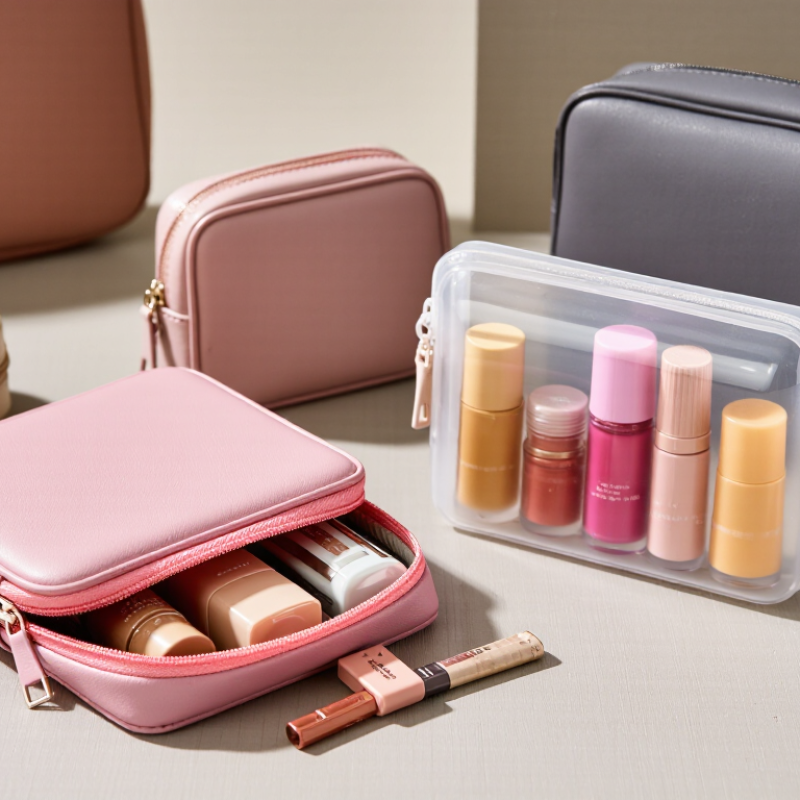
Why Are Make Up Pouches Essential for Global Buyers?

What Are Make Up Pouches and How Do They Work?

Make up pouches are compact storage cases designed to hold cosmetics and personal care items. They usually combine a fabric body, a zipper, and an interior lining. Some include elastic loops, mesh pockets, or removable dividers. These features keep lipstick, brushes, bottles, and small tools from moving loosely inside a handbag or suitcase. Small details matter. A wide opening improves visibility, while a flat base helps the pouch stand on a bathroom counter. From practical sourcing experience, buyers should check stitching, zipper movement, lining quality, and handle strength before placing larger orders.

The pouch works through simple organization and physical protection. A padded or coated exterior can reduce scratches and limit contact with light splashes. However, it should not be called waterproof unless laboratory testing supports that claim. Sealed seams, washable linings, and corrosion-resistant zipper parts can improve daily use, but each feature may affect cost and production time. Size also changes performance. An overly shallow pouch may waste space, while an oversized one may let products shift and break. Not always. Global buyers often request samples, fill them with common items, and test cleaning, loading, and repeated opening. That process can reveal problems that product photos hide, especially weak corners or unpleasant odors from new materials.

Why Do Global Buyers Need Make Up Pouches?

Global buyers need makeup pouches because cosmetics rarely stay organized during shipping, travel, or daily use. A well-designed pouch separates bottles, brushes, palettes, and small tools. It also reduces scratches, spills, and lost items inside larger bags. Buyers often look for more than attractive fabric. They check stitching, lining, zipper strength, dimensions, and cleaning performance. Small details matter.

For international purchasing teams, consistent quality is practical risk control. A pouch with a washable lining handles powder and liquid residue better than untreated textile. Reinforced seams support repeated opening, while a flat base helps products remain upright. Clear size specifications also simplify packing plans and reduce customer complaints. However, buyers should test samples under realistic conditions. A zipper may feel smooth in a showroom, then fail after hundreds of pulls. That happens.

Global buyers also need flexible options for different markets. Compact pouches suit handbags, while larger compartments serve professional kits or family travel. Materials should support durability, user comfort, and applicable safety requirements. Packaging dimensions, labeling, and shipping records need careful review too. I would not approve a large order from photos alone. Color can vary between screens and production batches. A physical sample reveals these gaps before they become expensive problems. Better questions lead to better purchasing decisions, even when the process feels slower.

Why Are Make Up Pouches Essential for Global Buyers? - Why Do Global Buyers Need Make Up Pouches?

Buyer Dimension Relevant Data or Standard Recommended Pouch Specification Why It Matters to Global Buyers Commercial Application
Air-travel compliance 100 ml / 3.4 US fl oz is the maximum container size commonly permitted for liquids in carry-on baggage under the U.S. Transportation Security Administration’s 3-1-1 rule. Transparent, resealable pouch with internal capacity of approximately 1 quart / 0.95 litre, suitable for small liquid cosmetics. Helps travelers organize liquid foundation, mascara, cleanser, sunscreen and other portable beauty products for security screening. Travel retail, airport retail, hotel amenities, gift sets and international e-commerce bundles.
Product organization Cosmetic routines commonly contain multiple product categories, including skin care, color cosmetics, tools and personal-care accessories. Use separate compartments, elastic holders or a double-layer construction; a practical medium size is approximately 20–25 cm × 12–18 cm. Reduces product mixing and makes small items easier to find, improving convenience during travel and daily use. Multi-compartment organizers, promotional kits and subscription beauty boxes.
Leak and spill protection Liquid and cream cosmetics can leak when exposed to pressure, temperature changes or loose closures during transport. Choose coated fabric or laminated textile, reinforced seams, a corrosion-resistant zipper and a washable interior lining. Protects clothing, luggage and other products while reducing customer complaints caused by leakage. Travel pouches for serums, lotions, creams, cleansing products and liquid make-up.
Material durability Polyester and nylon are widely used synthetic textile fibers with good abrasion resistance and dimensional stability compared with many untreated natural fabrics. Use medium-weight fabric, reinforced stress points and a zipper pull that can withstand repeated opening and closing. Durable construction supports repeated use and helps buyers meet quality expectations across different markets. Reusable cosmetic bags, retail accessories and long-life promotional merchandise.
Easy maintenance Cosmetic residue commonly contains oils, pigments, waxes or powders that can stain untreated textile surfaces. Specify a smooth, wipe-clean lining and light-to-medium interior colors that make residue visible during cleaning. Improves hygiene, product longevity and user satisfaction, especially for frequently used travel pouches. Daily make-up organizers, professional make-up kits and personal-care storage products.
Portability and packing efficiency Soft-sided pouches can compress when partially empty and generally occupy less space than rigid cosmetic cases of similar capacity. For compact travel use, select a flat pouch of approximately 18–22 cm × 10–14 cm; for broader storage, use a gusseted pouch with a depth of 6–10 cm. Supports efficient packing in handbags, carry-on luggage, backpacks and bathroom cabinets. Compact travel accessories, commuter kits and portable personal-care collections.
Visibility and product access Transparent panels allow contents to be identified without opening the pouch, while wide openings improve access to products stored at the bottom. Combine a transparent TPU or PVC panel with a top opening of at least 16–20 cm, depending on pouch width. Reduces search time and helps users check whether essential cosmetics are missing before travel. Clear travel pouches, see-through organizers and airport-friendly toiletry kits.
Customization and market adaptability Global buyers often require different languages, color preferences, packaging formats and compliance information for individual markets. Use a neutral base design with customizable labels, woven tags, printed panels, color options and packaging inserts. Allows the same pouch structure to be adapted for different regions without redesigning the complete product. Private-label programs, distributor orders, seasonal campaigns and corporate gifting.
Sustainability considerations Reusable products can reduce the need for repeated disposable storage bags, although environmental performance depends on material choice, product lifespan and end-of-life options. Prioritize long service life, repairable components, minimal packaging and clearly identified material composition. Supports buyers’ sustainability objectives while avoiding unsupported environmental claims. Reusable beauty accessories, eco-conscious retail collections and long-term promotional products.
Shipping and storage efficiency Soft textile products can be nested or packed flat, reducing unused volume during warehousing and transportation. Design foldable construction, consistent finished dimensions and stackable retail packaging. Improves carton utilization and simplifies inventory handling for importers, wholesalers and retailers. Bulk procurement, cross-border e-commerce fulfillment and multi-market distribution.

Reference: U.S. Transportation Security Administration, “3-1-1 Liquids Rule”: https://www.tsa.gov/travel/security-screening/liquids-rule. Dimensions shown as practical product-design specifications rather than universal regulatory requirements.

Which Materials and Designs Meet International Market Needs?

Global buyers need make up pouches that survive different climates, regulations, and retail systems. Humidity can soften paper laminates, while heat may weaken zipper seals. A practical pouch needs reliable sealing, low product loss, and clear material identification. Grand View Research valued the global cosmetic packaging market at approximately US$32.4 billion in 2022. This growth increases pressure for packaging that is both attractive and operationally dependable.

Material selection should match the product and local recovery infrastructure. Mono-material PE or PP structures can simplify recycling compared with mixed laminates. However, aluminum barriers often provide stronger protection against oxygen, light, and moisture. Recycled polyester may improve content claims, but it does not automatically create a recyclable pouch. Smithers’ Future of Sustainable Packaging to 2028 identifies recyclability, recycled content, and lighter structures as major packaging development priorities. The details matter.

Design also determines international usability. A wide opening supports clean filling and easier consumer access. A reinforced bottom helps the pouch stand on crowded retail shelves. Child-resistant features are unnecessary for many cosmetic formats, but tamper evidence can improve trust. Clear dosage graphics and multilingual labels reduce confusion across markets. ISO 22716-based manufacturing controls can support consistent hygiene and quality documentation. Still, a pouch can be technically recyclable yet rarely recycled. That gap deserves uncomfortable attention. Suppliers should test seal strength, drop resistance, migration safety, and humidity performance before scaling production. Fancy finishes may attract attention, but they can complicate recycling and raise costs.

Why Are Make Up Pouches Essential for Global Buyers?

Material selection directly affects product protection, shipping performance, shelf life, and recyclability. The chart compares representative oxygen and water-vapor barrier values for commonly used pouch structures. Lower values indicate stronger barrier performance.

Representative packaging-engineering benchmarks at approximately 23°C and 50% relative humidity. Actual results vary according to film thickness, coating, seal quality, test method, and pouch construction. High-barrier laminates are suitable for oxygen- and moisture-sensitive cosmetics, while mono-material PE structures support simpler recycling streams.

How Do Make Up Pouches Support Branding and Product Protection?

For global buyers, a makeup pouch is more than a soft container. It is a mobile branding surface that travels from warehouses to bathroom counters. A carefully chosen pouch can display colors, textures, logos, or short care messages without overcrowding the design.

In my sourcing experience, buyers often overlook the zipper pull and inner lining. These small details influence perceived quality. A smooth zipper reduces snagging, while a wipe-clean lining helps contain powder and liquid residue. Consistent stitching also matters. Loose threads quickly weaken trust.

Protection begins with material and construction, not decoration alone. A padded or structured pouch can reduce crushing during shipment and daily use. Water-resistant fabric offers useful defense against splashes, though it should never be called fully waterproof without test results. That distinction prevents unreliable claims.

Samples should be checked for seam strength, color transfer, odor, and zipper performance after repeated opening. A simple drop test can reveal weak corners. It is not perfect. Yet it exposes practical flaws early.

Packaging size also deserves attention. Excess space may increase movement, scuffing, and freight costs. Clear labeling and care instructions support safer handling across different markets. A crowded print may look cheap after abrasion. Durable, readable details often communicate more confidence than excessive decoration.

What Should Buyers Consider When Choosing a Make Up Pouch Supplier?

Global buyers should assess more than a make up pouch’s appearance. Supplier reliability matters across sampling, production, inspection, and delivery. Grand View Research estimates that the global cosmetic packaging market reached USD 32.31 billion in 2023. It also forecasts continued growth through 2030. This growth increases supplier competition, but not every factory offers stable quality.

Ask for material specifications, production capacity, and recent quality records. Confirm whether the pouch protects products from moisture, leakage, light, and abrasion. A practical supplier should provide test samples, seal-strength results, dimensional tolerances, and packaging details. Request evidence from independent laboratories when possible. Intertek’s packaging testing guidance highlights migration, durability, and transport performance as important evaluation areas. These checks reduce costly surprises. Still, test results may not represent every production batch. That is an uncomfortable weakness buyers should address.

Tips: Compare at least three suppliers. Check sample consistency. Review factory audits and corrective-action records. Confirm minimum order quantities, lead times, and replacement terms in writing. Ask how recycled or recyclable materials affect strength and cost. The Ellen MacArthur Foundation reports that packaging represents a major share of plastic use globally, making material decisions commercially important. However, “eco-friendly” claims can be vague. Require material percentages and recognized certifications. A cheaper pouch may fail during shipping. A premium pouch may also exceed the buyer’s real needs. Supplier selection should balance protection, appearance, documentation, and dependable communication.