Staverton is a British designer & manufacturer of contemporary office furniture.
Call us today: +44 (0)20 3794 1200
©2025 Staverton (UK) Ltd | Terms | Disclaimer | Cookies | Privacy

![]()
Choosing the best Car Perfume Diffuser is less about finding the strongest fragrance and more about matching the device to your car, routine, and sensitivity to scent. A compact vent clip is simple and inexpensive. It releases fragrance as air moves through the vents, though its intensity can rise when the fan runs. A waterless nebulizing diffuser offers more control and a stronger aroma, but it may need charging and careful placement. Passive wooden or ceramic options are quieter. Their scent can fade unevenly.
Sensory psychologist and fragrance researcher Dr. Avery Gilbert studies how people perceive smells. A practical principle informed by that work is: “A cabin fragrance should feel present, not overpowering.” Treat that as a guide, not a universal rule. One driver’s fresh citrus is another passenger’s headache. Even a pleasant scent can become tiring on a long commute.
Think about real cabin details. Does the diffuser block an air vent? Can a bottle tip over on a sharp turn? Is the scent still comfortable after twenty minutes with the windows closed? These small tests matter more than dramatic product claims. Compare passive, vent-mounted, and powered designs by fragrance control, upkeep, and cabin fit. No type wins for every car. A weaker option may be better for you—and it is worth admitting that scent preferences can change from day to day.
A car perfume diffuser releases fragrance by evaporation or by actively dispersing tiny droplets. In a vent-clip design, air passes over a scented pad or wick, carrying volatile fragrance molecules through the cabin. Warmth and stronger airflow can make the scent seem more intense, while a cold morning may make it fade. Simple, but not perfectly predictable.
Powered models use a fan, heat, or ultrasonic vibration to disperse fragrance from a reservoir. Ultrasonic devices create droplets; they do not simply turn fragrance into a gas. The cabin’s airflow, temperature, and open windows all affect where the scent travels. The U.S. Environmental Protection Agency reports that indoor VOC concentrations can be two to five times outdoor levels, though that finding concerns indoor environments generally, not cars specifically. It is a useful reason to avoid assuming that stronger fragrance means better performance. A gentle scent is often enough. I’ve found intensity easy to misjudge, especially in a warm parked car. Check that a device suits its refill, and stop using it if the scent irritates you.
Which Type of Car Perfume Diffuser Is Best?
The Main Types of Car Perfume Diffusers
Vent-clip diffusers attach to an air vent and use moving air to spread fragrance. They are compact and easy to reach. With the fan off, the scent may fade quickly. Place one away from controls and check that it does not block airflow.
Hanging bottle diffusers release fragrance through a small wooden cap or wick. Their scent can last for weeks, depending on temperature and use. Keep the bottle upright and secure; sharp turns can make a loose container spill. Solid and wooden diffusers are another passive option. They need no power, but their scent is often gentler and may diminish over time. Simple, but not always strong.
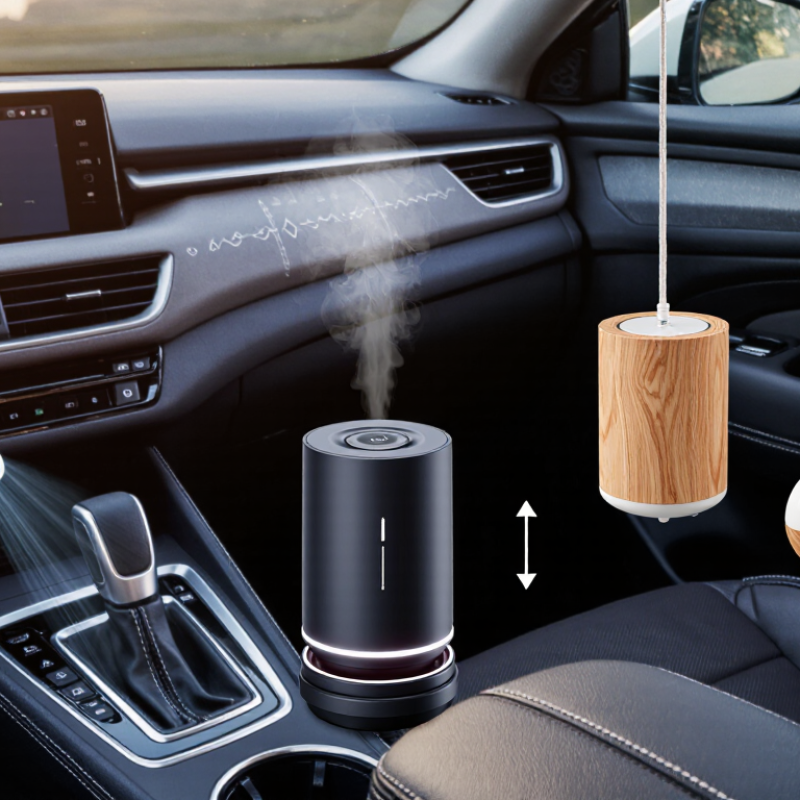
Electric diffusers use a USB connection or another power source to disperse fragrance, sometimes with adjustable settings. They offer more control, though they take up space and need occasional cleaning. Hot cabins can intensify any fragrance, so start with a low setting or a small amount. There is no perfect type. A vent clip suits quick, noticeable scent; a passive diffuser may suit drivers who prefer a softer presence. Check the instructions, since designs and refill methods differ.
Passive vent clips and hanging diffusers work without electrical power. Fan-powered, heated, and ultrasonic diffusers require power to operate. Designs vary, so check the product specifications before choosing.
Vent-clip diffusers are simple and need little attention. Air from the vents carries fragrance into the cabin, so the scent usually feels stronger when the fan is running. With the fan off, it may fade quickly. Replace or refresh the scented insert when it dries out, and wipe any residue from the vent. This type suits drivers who prefer a light, adjustable scent rather than a constant strong one.
Powered diffusers can offer steadier output. Some use gentle heat, while others disperse fragrance through a small fan or misting mechanism. Heat-based models may evaporate liquid faster, so check the refill level more often. Mist-based units can need regular cleaning around the outlet; dried oil may affect performance. Water-based models also need careful placement, since a bumpy road can make spills more likely. Not ideal for every car.
Passive hanging bottles are easy to install and usually require no power. Their scent can vary with cabin temperature, though, and a warm parked car may make it noticeably stronger. Keep the bottle upright and follow its fill and placement instructions to help prevent leaks or marks on interior surfaces. I’ve found that “low maintenance” does not mean maintenance-free: dust, residue, and changing temperatures still matter. A quick check during routine car cleaning helps catch problems early.
| Diffuser Type | How It Works | Scent Performance | Control and Runtime | Maintenance | Main Considerations | Best For |
|---|---|---|---|---|---|---|
| Vent-Clip Diffuser | Fragrance material or a scented refill releases aroma as air passes through or around it. | Usually strongest when the fan is running; airflow can spread the scent through the cabin. | Intensity often depends on fan speed and, on some designs, an adjustable opening. The refill gradually loses strength. | Replace or refresh the scented insert or refill when its aroma fades; wipe the clip if residue accumulates. | Performance varies with airflow and temperature. Keep it securely attached and clear of controls. | Drivers who want a simple, compact option that works with the car’s ventilation. |
| Hanging Paper or Fiber Diffuser | A fragrance-treated porous card or fiber absorbs and releases volatile fragrance ingredients into the air. | Typically mild to moderate and strongest close to the hanging item; it does not actively circulate fragrance. | Generally offers little or no intensity adjustment. Scent strength declines as the fragrance evaporates. | Replace the item when the scent fades. Avoid contact with dashboards and other surfaces, since fragrance oils may mark some finishes. | Low cost and no power needed, but scent distribution is limited and depends on cabin conditions. | People who prefer a low-cost, disposable, power-free option. |
| Gel or Solid Diffuser | Fragrance evaporates gradually from a scented gel, wax-like solid, or other porous solid material. | Usually steady but gentle; effectiveness depends on the exposed surface area and cabin airflow. | Some containers allow the opening to be adjusted. The product lasts until its fragrance material is depleted or dried out. | Replace the container or refill when depleted; clean any residue according to the product instructions. | Simple and generally spill-resistant when upright, but heat can affect the material and scent release. | Drivers seeking a straightforward diffuser with little day-to-day upkeep. |
| Wood or Reed Diffuser | A scented liquid travels through a porous wooden element or reeds and evaporates from the exposed surface. | Passive and usually localized; airflow can help carry the scent through the cabin. | Some designs allow the exposed surface to be changed, but precise intensity control is limited. The liquid gradually evaporates. | Refill or replace the liquid when needed. Keep the container upright and clean spills promptly, following the product instructions. | Uses fragrance liquid, so leakage or contact with vehicle surfaces is a consideration, especially in heat or if tipped. | Those who prefer passive fragrance release and are comfortable checking the container regularly. |
| Ultrasonic Water-Based Diffuser | Powered vibration turns a mixture of water and fragrance into a fine mist; many models require a USB power source. | Can disperse scent while operating, though output depends on the device, cabin airflow, and fragrance compatibility. | Some models offer intermittent operation or output settings. Runtime is limited by the water reservoir and power supply. | Empty and clean the reservoir regularly to reduce residue and buildup; use only liquids permitted by the device instructions. | Requires power and water. The mist and liquid make careful placement important, away from electronics and sensitive surfaces. | Drivers who want powered operation and are willing to refill and clean a small reservoir. |
| Waterless Nebulizing Diffuser | A powered mechanism disperses fragrance oil or a compatible fragrance blend without a water reservoir. | Often provides more active, adjustable fragrance release than passive formats; actual coverage varies by device and cabin conditions. | Some models provide output settings, timers, or intermittent cycles. Operation depends on battery charge or a power connection. | Refill or replace the fragrance container as directed and clean the outlet or components when required by the manufacturer. | Uses power and fragrance liquid; check compatibility, keep it upright, and avoid directing concentrated output at surfaces. | Drivers who want adjustable, powered scent delivery and do not mind occasional charging and upkeep. |
A diffuser’s scent depends on more than its format. Cabin size, vent airflow, temperature, and placement all matter. A vent-mounted diffuser may spread fragrance quickly when the fan runs, but scent can fade when airflow stops. A passive gel or solid diffuser releases fragrance more gradually, though it may feel weak in a large cabin. Stronger is not always better; an overpowering scent can make a short drive uncomfortable.
Heat changes fragrance release. In a 2018 test, AAA found that a car interior reached about 109°F after 20 minutes and 118°F after 40 minutes, with an 80°F outdoor temperature. That test measured cabin heat, not fragrance output, but it helps explain why a diffuser may smell much stronger in a parked, sunlit car. Research by Knibbs and colleagues in Atmospheric Environment (2011) also found that vehicle cabin air exchange varies with ventilation conditions, affecting how quickly airborne substances disperse.
Tips: Start with the lowest setting. Place the diffuser away from direct sunlight and avoid aiming fragrance at your face. Check the scent again with the fan off and on. Small cabins can surprise you. A little trial and adjustment is usually needed.
Choosing a car diffuser starts with the way you use your vehicle. A vent clip suits drivers who want a simple setup and fragrance that spreads while the fan runs. Its strength can change with airflow, though, and a warm dashboard may make some scents feel stronger. Try a mild fragrance first. A hanging passive diffuser needs no power and takes little space, but its scent may fade unevenly. I still find that unpredictability a little annoying.
For more control, an electric diffuser can offer adjustable output or timed operation. It may suit frequent drivers who prefer a consistent scent. Check how it is powered, how often it needs refilling, and whether its instructions allow use in a moving car. More features are not always better. A bright display or fiddly controls can distract you.
Match the type to your habits and sensitivity. If passengers dislike strong smells, choose a low-output option and use it sparingly. Keep the device and any liquid away from airbags, pedals, and your view of the road. A diffuser should feel like a small comfort, not another thing to manage. Test it on a short drive before relying on it daily.
Staverton is a British designer & manufacturer of contemporary office furniture.
Call us today: +44 (0)20 3794 1200
©2025 Staverton (UK) Ltd | Terms | Disclaimer | Cookies | Privacy

![]()
Please enter your details below to access the design files.