
Staverton is a British designer & manufacturer of contemporary office furniture.
Call us today: +44 (0)20 3794 1200
©2025 Staverton (UK) Ltd | Terms | Disclaimer | Cookies | Privacy


Choosing among China’s top 10 Pilates chair manufacturers calls for more than comparing prices or polished product photos. Buyers need to understand how each supplier approaches design, production, quality checks, and communication. A chair may look sturdy in a catalog, yet small details—such as a smooth pedal return, secure spring attachments, and stable feet—matter during repeated use. Details matter.
Joseph Pilates, the method’s creator, is often credited with saying, “A few well-designed movements, properly performed in a balanced sequence, are worth hours of sloppy calisthenics or forced contortion.” That idea remains useful when assessing a pilates chair. Thoughtful construction supports controlled movement; vague specifications make meaningful comparison harder. Buyers should ask about frame materials, upholstery, spring options, dimensions, customization, packaging, and inspection procedures. Request clear answers, not just reassuring claims.
This guide introduces ten China-based manufacturers for buyers seeking equipment for studios, distributors, or private-label projects. It is intended as a practical starting point, not a substitute for product testing or direct supplier checks. Compare sample quality, documented specifications, production capacity, and response times before making a decision. Ask for details in writing. A supplier’s public information may not tell the whole story, and even a promising sample can leave questions about consistency across larger orders. That uncertainty deserves attention. A careful shortlist helps buyers identify suitable partners and make more informed purchasing decisions.
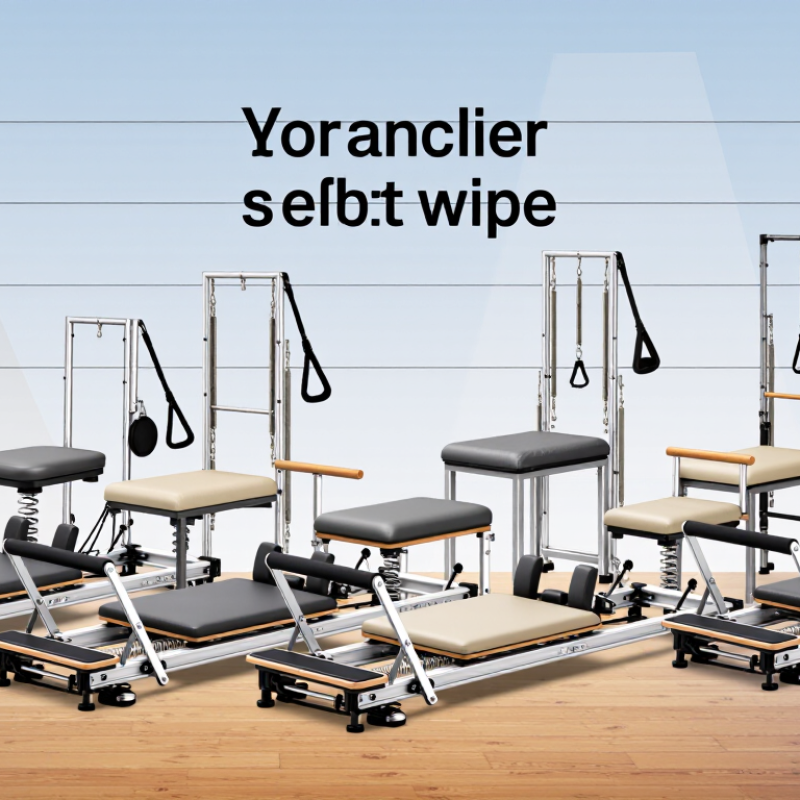
A Pilates chair is a compact exercise apparatus built around a raised seat and a spring-loaded pedal. Pressing the pedal creates adjustable resistance, while handles or side supports can help with balance. Unlike a reformer, the chair has a small footprint and asks the user to control movement from a fixed base. That makes it practical for studios with limited floor space, though compact does not mean easy. Small details matter. Spring tension, pedal width, and the user’s height can change how an exercise feels.
People use chairs for seated presses, standing leg work, supported lunges, and controlled arm exercises. A session may begin with both feet planted, then progress to one leg only when balance and control are reliable. The pedal should move smoothly; bouncing it can reduce control and strain joints. An instructor can adjust spring resistance and offer support, especially for beginners or anyone returning after a break. At home, check that the chair sits on a level, nonslip surface and inspect the springs before use. Not every movement suits every body. Even simple-looking chair work can become surprisingly demanding, so progressing slowly is sensible.
| No. | Buyer Evaluation Dimension | What to Check | Why It Matters and How the Chair Is Used |
|---|---|---|---|
| 1 | Chair design and intended use | Confirm whether the equipment is a compact Pilates chair with a seat, a spring-loaded pedal, or pedals that operate independently. | A Pilates chair uses spring resistance and body weight to support strength, balance, and mobility exercises. Its design influences the exercises and user levels it can accommodate. |
| 2 | Spring resistance options | Ask how many springs are supplied, how resistance is changed, and whether the maker provides clear instructions for spring setup. | Springs provide adjustable resistance. Different settings can change exercise difficulty, but the appropriate setup depends on the movement and the user. |
| 3 | Pedal configuration | Check whether the pedal is one piece or split into independently moving sections, and how the pedal connects to the spring system. | A single pedal and split-pedal design offer different movement options. Split pedals can allow unilateral work, in which one side moves separately from the other. |
| 4 | Handles and support options | Determine whether handles are included, removable, or offered as an option, and review how they attach to the frame. | Handles can provide support during standing or balance-focused exercises. They do not replace proper instruction or the need to use equipment within the user’s ability. |
| 5 | Frame stability | Review the frame construction, base footprint, joinery, and product documentation. Ask about the intended user-weight limit and how it was determined. | Users may push, pull, or shift their weight against the chair during exercises. A stable frame and clearly stated limits are important for appropriate selection and use. |
| 6 | Seat and pedal surfaces | Check the upholstery, padding, pedal covering, seams, and whether the surfaces can be cleaned using suitable care products. | The seat may be used for seated or supported movements, while the pedal is pressed by the hands or feet in different exercises. Durable, maintainable surfaces support regular studio use. |
| 7 | Exercise range and user level | Ask for an exercise guide or demonstration showing seated, standing, and supported positions, as applicable to the model. | Depending on the chair design and instruction, exercises may target the legs, arms, trunk, and balance. Buyers should match the equipment and teaching resources to their users’ experience. |
| 8 | Dimensions and available space | Request the assembled dimensions, clearance needed around the chair, and any relevant shipping or storage dimensions. | Pilates chairs are generally more compact than many larger Pilates apparatuses, but users still need sufficient space to move safely around the equipment. |
| 9 | Assembly and maintenance | Check assembly instructions, tools required, inspection guidance, and recommended checks for springs, fasteners, moving parts, and upholstery. | Regular inspection can help identify wear or loose components. Buyers should follow the manufacturer’s maintenance instructions and stop using equipment that appears damaged. |
| 10 | Documentation and purchasing support | Request a specification sheet, user instructions, warranty terms, spare-parts information, and written details of applicable safety testing or compliance claims. | Clear documentation helps buyers compare products, plan maintenance, and understand the equipment’s intended use. Verify any testing or compliance claim against the relevant supporting documents. |
Staverton is a British designer & manufacturer of contemporary office furniture.
Call us today: +44 (0)20 3794 1200
©2025 Staverton (UK) Ltd | Terms | Disclaimer | Cookies | Privacy