Staverton is a British designer & manufacturer of contemporary office furniture.
Call us today: +44 (0)20 3794 1200
©2025 Staverton (UK) Ltd | Terms | Disclaimer | Cookies | Privacy

![]()
China has become a major source of granite for overseas construction, hospitality, landscaping, and memorial projects. Its supplier network includes quarry owners, slab processors, fabricators, exporters, and trading companies. That variety creates opportunity, but it also demands careful verification.
A reliable supplier should explain the granite’s quarry location, block availability, color range, thickness tolerance, surface finish, and quality-control process. Ask for recent photos, physical samples, test reports, packing images, and references from comparable export projects. A polished slab may look impressive under showroom lighting. Small fissures, resin repairs, uneven calibration, or color variation can appear after installation.
Dr. Fred Hueston, a natural-stone consultant and author, offers a useful warning: “Stone is not maintenance-free.” His point matters when comparing Chinese granite suppliers. Good purchasing decisions consider sealing guidance, cleaning requirements, replacement availability, and long-term performance. Price still matters. It should not lead the evaluation.
Experienced buyers often inspect containers before shipment or appoint an independent inspection company. They also confirm crate strength, moisture protection, labeling, and documentation before payment. Even strong suppliers can face quarry changes, seasonal delays, or inconsistent batches. That is an uncomfortable reality.
This guide examines China’s leading granite suppliers through practical criteria, including product consistency, export experience, communication, customization, packaging, and after-sales support. It will not treat every impressive website as proof of authority. A supplier’s real reliability appears in samples, records, factory conditions, and transparent answers. Mistakes remain possible, but disciplined verification can reduce costly surprises.
China’s granite supply industry is defined by scale, processing depth, and dense regional production networks. China Customs trade tables for 2023 placed natural-stone exports at roughly US$4.7 billion, although HS categories combine granite with other stones. That limitation matters. Data can look precise while hiding product differences.
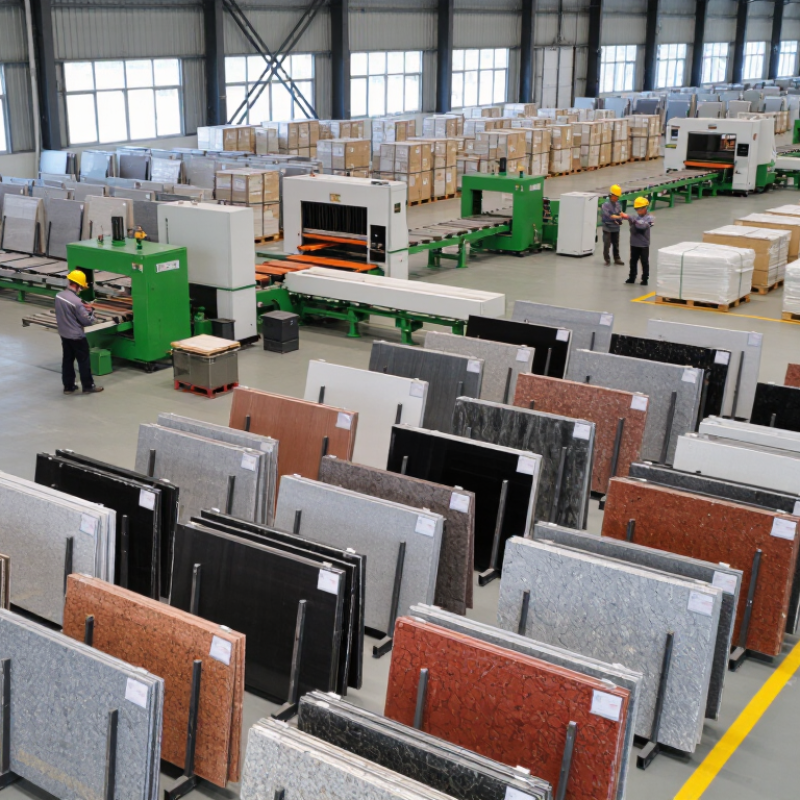
Production often follows a practical sequence. Blocks arrive at coastal or inland yards, then move through gang saws, polishing lines, CNC cutting, and water-jet areas. A buyer may inspect a 20-millimeter slab, check its calibration, and compare three lots under daylight. Small color shifts can appear across one quarry bench. They are not always defects, but they require written approval.
The China Stone Material Association has reported annual domestic stone output above one billion square meters in recent years. This volume supports flexible cutting and project-based customization. UN Comtrade records also show China among the leading exporters of worked stone products. Yet low price alone is a weak buying signal. Skilled inspection should cover water absorption, flexural strength, thickness tolerance, resin treatment, crate moisture, and packing photographs. ASTM and EN test results are useful, but laboratory methods can differ. That is an uncomfortable detail. A certificate without a matching sample proves little. Experienced buyers therefore request batch photographs, pre-shipment checks, and clear acceptance limits before production.
How to Identify Reliable Chinese Granite Suppliers
Choosing a Chinese granite supplier requires more than comparing online prices. Start by checking quarry information, processing facilities, export experience, and product specifications. A reliable supplier should explain the stone’s origin, color variation, absorption rate, hardness, and available finishes. Ask for recent photos, production videos, and independent test reports. Do not accept vague descriptions.
Request physical samples before placing a large order. Compare the sample with the proposed batch under natural and indoor light. Granite can change slightly between blocks. This detail is often underestimated. Check slab thickness, edge treatment, surface consistency, and packing methods. Ask how wooden crates protect corners during long-distance transport. Experienced suppliers usually provide clear tolerances and inspection procedures. Their answers should remain consistent across sales, technical, and shipping teams.
Verify business documents and export references through practical conversations. Contact previous buyers when possible, and ask about delivery accuracy, replacement handling, and communication after payment. A video factory tour can help, but it is not complete proof. I have seen attractive facilities fail to explain basic quality controls. That deserves caution. Use a written contract covering material grade, dimensions, finish, inspection rights, payment stages, and remedies for defects. Keep communication records. A dependable supplier welcomes specific questions, admits production limits, and suggests realistic alternatives instead of promising everything.
| Evaluation Dimension | Reliable Supplier Benchmark | Evidence Global Buyers Should Request | Why It Matters |
|---|---|---|---|
| 01 Legal Business Verification | Supplier provides a consistent registered company name, business address, legal representative information, and active business license. | Business license copy, official registration details, company bank-account information, and matching names across quotation, contract, invoice, and shipping documents. | Confirms that the buyer is dealing with a traceable legal entity rather than an unverifiable trading contact. |
| 02 Product Range and Material Consistency | Can clearly specify granite variety, color, finish, thickness, tolerances, edge profile, and acceptable natural variation. | Current product catalog, high-resolution slab or tile photographs, physical samples, technical specifications, and written approval samples. | Granite is a natural stone, so color, veining, mineral distribution, and background tone can vary between batches. |
| 03 Dimensional Accuracy | Uses documented production tolerances and checks thickness, length, width, squareness, and flatness before packing. | Inspection checklist, measurement records, approved drawings, and pre-shipment inspection photographs showing calibrated measuring tools. | Accurate dimensions reduce installation problems, joint inconsistencies, material waste, and replacement claims. |
| 04 Physical Performance Data | Provides test data appropriate to the intended application, such as water absorption, density, compressive strength, and flexural strength. | Recent laboratory reports linked to the supplied material, test methods, sample identification, and testing dates. | Performance requirements differ for façades, flooring, countertops, stairs, paving, and other applications. |
| 05 Quality Management | Maintains documented incoming-material, in-process, and final-inspection procedures with defined acceptance criteria. | Quality-control process, inspection forms, nonconformity records, corrective-action procedure, and production photographs or video. | A repeatable quality system is more dependable than a one-time visual inspection or informal assurance. |
| 06 Sample-to-Production Control | Agrees in writing how the approved sample will be compared with mass production and how natural variation will be handled. | Signed sample approval, batch photographs, slab layout images, color-range confirmation, and a clear rejection or replacement procedure. | Prevents disputes caused by differences between sample pieces and delivered production batches. |
| 07 Processing Capability | Can support the required combination of sawing, polishing, honing, flamed or brushed finishing, CNC cutting, drilling, and edge processing. | Machine list, processing-area photographs, technical drawings, shop drawings, and examples of comparable completed work. | Complex fabrication requires stronger process control than standard cut-to-size products. |
| 08 Packaging and Loading | Uses packaging suited to stone weight, surface finish, transport distance, moisture exposure, and handling conditions. | Packing specifications, crate photographs, loading plans, gross and net weight details, and container-loading records. | Proper bracing and separation help prevent corner damage, scratches, breakage, and shifting during transport. |
| 09 Export Documentation | Can prepare consistent commercial and shipping documents, including commercial invoice, packing list, bill of lading, and origin documents when required. | Redacted sample documents, harmonized-system classification confirmation, shipping terms, and document-submission timeline. | Correct documentation supports customs clearance, payment processing, insurance claims, and import compliance. |
| 10 Trade Terms and Cost Transparency | Separates stone, processing, packaging, inland transport, port charges, documentation, and freight-related costs in the quotation. | Itemized quotation under an agreed Incoterm, validity period, minimum order quantity, payment schedule, and list of exclusions. | A low unit price may exclude important costs or reflect differences in thickness, finish, quality, or packaging. |
| 11 Production Lead Time | Provides a realistic schedule covering sample approval, material preparation, fabrication, inspection, packing, and dispatch. | Written production timeline, capacity confirmation, order milestones, and procedures for reporting delays. | Clear milestones help buyers coordinate construction schedules, installation teams, and inventory planning. |
| 12 Communication and Technical Support | Responds with specific technical information, confirms drawings and measurements, and identifies ambiguities before production. | Written quotation, drawing-confirmation workflow, named project contact, response-time expectations, and records of technical approvals. | Good communication reduces errors in dimensions, quantities, finishes, labeling, and installation requirements. |
| 13 Inspection and Acceptance | Accepts reasonable pre-shipment inspection based on agreed specifications, approved samples, quantity, finish, and packaging standards. | Inspection scope, inspection timing, defect classification, tolerance table, photo records, and written acceptance procedure. | Independent or buyer-authorized inspection creates objective evidence before the goods leave the factory. |
| 14 After-Sales and Claims Handling | Defines how shortages, breakage, dimensional defects, finish problems, and specification deviations will be investigated and resolved. | Written claims policy, required evidence, response deadline, replacement or credit terms, and responsibility for confirmed defects. | Clear remedies protect the buyer when problems are discovered after delivery or installation preparation. |
| 15 Responsible Sourcing and Compliance | Can explain the origin and supply chain of the stone and provide relevant environmental, labor, or project-specific compliance information. | Quarry or source disclosure where available, material-origin statement, compliance declarations, and project-required certifications. | Public, commercial, and green-building projects may require traceability and documented responsible-sourcing practices. |
China’s granite suppliers serve projects with slabs, tiles, stair treads, kerbs, paving, monuments, and custom cut-to-size pieces. According to the U.S. Geological Survey’s Mineral Commodity Summaries 2024, China remains a major global producer of dimension stone. UN Comtrade data also identifies China as a significant exporter of worked monumental and building stone.
Slabs usually range from standard commercial grades to carefully selected blocks with consistent color. Popular choices include gray, black, white, red, and patterned granite. Suppliers commonly provide polished, honed, flamed, brushed, leathered, sandblasted, and waterjet finishes.
Polished surfaces reflect light and suit countertops. Honed finishes reduce glare and appear softer.
Flamed granite offers stronger texture for outdoor paving, but its rough surface can collect dirt.
Ask for more than a digital catalog. Request recent quarry photographs, slab videos, thickness records, water absorption results, and sample approval. ASTM and EN test reports can help buyers compare strength, abrasion resistance, and frost performance. The Natural Stone Institute emphasizes testing because appearance alone cannot predict installation performance.
Details matter.
Some suppliers describe a finish as “leathered” when its texture varies noticeably across slabs. That difference may affect large wall panels. I would also check resin treatment, edge processing, packing methods, and container loading photos. Granite is durable, but careless selection still creates waste, shade mismatch, and costly replacement.
International buyers usually judge granite through measurable quality, not attractive photographs. Quality starts with the quarry source, block selection, and processing controls. Ask for recent slab photos, batch details, and test reports covering water absorption, density, and flexural strength. These documents show whether the stone suits flooring, countertops, façades, or heavy commercial use.
Look closely at color consistency, veining, edge straightness, polishing, and surface repairs. Small samples can mislead. For large projects, request several slabs from the same production batch. Inspect the crate design, protective film, corner guards, and moisture control before shipment. A reliable supplier should explain acceptable natural variations instead of promising perfect uniformity.
Pricing requires more than comparing one square-meter figure. Check whether the quote includes cutting, polishing, packaging, inland transport, port charges, and export documentation. Compare identical specifications, thicknesses, finishes, and delivery terms. A cheap quote may hide weaker grading or higher breakage risk. Freight changes can also affect the final landed cost significantly.
Experienced buyers often arrange independent inspections before loading. This adds cost, but it can reveal shade differences or damaged edges early. On one project, a sample looked excellent, yet the full batch showed uneven polishing. That experience matters. Suppliers should provide clear production timelines, replacement policies, and inspection records. Trust grows through evidence, although even careful evaluation cannot remove every natural variation.
Importing granite from China starts with a precise product brief. Specify the stone type, color range, slab thickness, surface finish, edge profile, and acceptable variation. A photograph is not enough. Request recent quarry images, production photos, and physical samples before approving an order. Check the supplier’s business registration, export experience, quality records, and references. Video calls can reveal stockyards, cutting equipment, and packing practices, although they are not perfect proof.
Confirm the quotation in writing, including quantity, dimensions, tolerances, payment terms, and delivery conditions. Clarify whether the price covers loading, inland transport, insurance, and ocean freight. Your customs broker should verify the correct tariff classification, import duties, documents, and destination requirements. Do not guess here. It can become expensive. Before shipment, hire an independent inspector to measure slabs, check polishing, photograph crate labels, and record defects. Granite should travel in strong, treated wooden crates with corner protection and moisture-resistant wrapping. Ask for the commercial invoice, packing list, bill of lading, certificate of origin, and inspection report. Compare every document with the purchase contract. My early sourcing attempts taught me that a beautiful sample can hide inconsistent thickness or weak packaging. Allow time for corrections, because rushed approvals often create larger problems at the port.
This chart presents an indicative planning schedule for importing granite from China. Actual timing depends on product specifications, order volume, factory capacity, port congestion, shipping route, customs clearance, and inland delivery conditions.
Staverton is a British designer & manufacturer of contemporary office furniture.
Call us today: +44 (0)20 3794 1200
©2025 Staverton (UK) Ltd | Terms | Disclaimer | Cookies | Privacy

![]()
Please enter your details below to access the design files.