What Are the Top 10 Chain Link Fence Mesh Types?
A chain-link fence may look simple from a distance, but its mesh affects strength, visibility, corrosion resistance, and maintenance. Choosing the right chain link fence mesh means looking beyond appearance. Wire thickness, opening size, coating, and weaving method all influence how a fence performs around a garden, yard, sports area, or commercial site. Small details matter.
This guide introduces ten common mesh types and explains what distinguishes them. It covers options such as galvanized, PVC-coated, stainless steel, and different wire gauges or opening patterns. These labels can overlap: one mesh may be both galvanized and PVC-coated, for example. That makes comparisons less tidy than they first appear. Still, understanding each feature helps narrow the choices.
For a practical decision, consider the local climate, expected use, installation conditions, and upkeep you can realistically manage. A fine opening may suit some applications, while thicker wire may offer greater rigidity. Neither is automatically best for every site. Product specifications also vary by manufacturer, so check measurements and coating details before ordering. A sample panel can help. It reveals texture, color, and flexibility in a way a product description cannot. This overview offers a starting point, not a substitute for checking site requirements. Even experienced buyers may need to revisit their assumptions.
How Chain Link Fence Mesh Is Defined and Classified
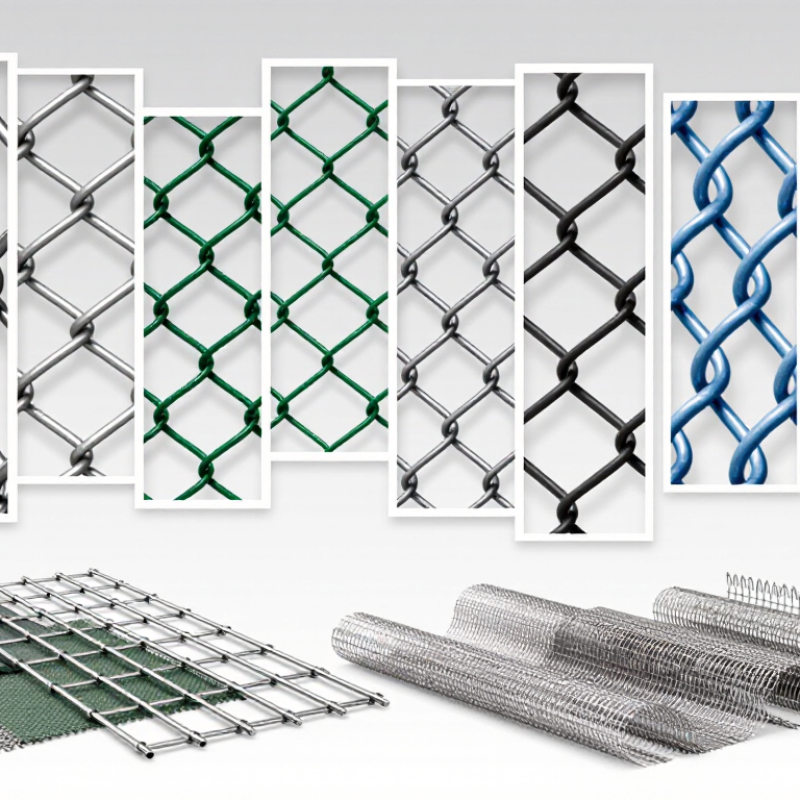
chain link fence mesh describes the woven network of steel wires and the openings between them. The familiar diamond pattern forms as each wire spirals around its neighbor. Mesh is not defined by pattern alone. Opening size, wire diameter, coating, and weave all affect strength, visibility, and maintenance needs.
Classifications often begin with opening size, measured between opposing wires. Common openings include 2-inch and 2¼-inch designs, though measurements and naming can vary. Wire diameter is another key measure: thicker wire generally resists bending better, but adds weight. Coatings create further categories, such as galvanized steel, polymer-coated wire, or combinations of protective layers. These labels describe materials, not guaranteed performance.
The “top 10” types are best understood as practical combinations of these features, rather than one universal ranking. A residential yard may use a different mesh from a sports enclosure or a secure storage area. Look closely at a sample: check the diamond width, wire thickness, and coating coverage. Small details matter. Supplier labels are not always consistent, so compare specifications instead of relying on a type name alone. Even then, site conditions can change what works best.
What Are the Top 10 Chain Link Fence Mesh Types?
Ten representative configurations classified by nominal mesh opening and wire diameter. This is a selection of commonly specified sizes, not a universal ranking.
The chart compares nominal clear opening sizes in millimetres; wire diameter is included in each label. Chain link mesh is also classified by coating, such as galvanized or PVC-coated. Available specifications and exact dimensions vary by supplier and local standards.
Which Materials and Coatings Are Used in Chain Link Mesh?
Chain link mesh is commonly made from galvanized steel, aluminum, or stainless steel. Galvanized steel is a practical choice for many yards and work sites. A zinc layer slows rust, especially where rain reaches the fence often. The mesh may be galvanized before weaving or coated afterward, and those processes can leave different finishes at cut edges.
PVC- or polyester-coated steel adds a colored outer layer over the metal. It can feel smoother to the touch and helps shield the wire from moisture and minor scratches. Green and black finishes often blend into landscaping, while lighter colors stand out more. Coating quality matters. A thin or damaged layer may expose steel, so inspect bends, joints, and cut ends rather than judging only by color.
Aluminum mesh resists corrosion without a zinc coating and is relatively light, but it may not suit every setting where impact strength is important. Stainless steel offers strong corrosion resistance, though its cost can be higher. The best material depends on exposure, maintenance, and the job itself. That choice is not always obvious. A sheltered garden fence and a windy coastal boundary face different conditions, and no coating makes mesh maintenance-free. Check the wire specification and coating details before comparing prices.
What Are the Top 10 Chain Link Fence Mesh Types?
Chain-link mesh is defined by its opening, wire, coating, and intended use. Ten common choices are galvanized steel, vinyl-coated steel, aluminum-coated steel, stainless steel, aluminum, small-aperture mesh, heavy-gauge mesh, lightweight residential mesh, privacy-slat-ready mesh, and high-security mesh. The categories overlap: a heavy-gauge fabric can also be galvanized or vinyl-coated.
ASTM A392-11(2022) specifies zinc-coated steel chain-link fabric, while ASTM F668-21 covers polymer-coated fabric. These standards offer useful benchmarks when comparing coating and material claims. A typical 2-inch diamond opening with 9-gauge wire measures about 0.148 inch in wire diameter; smaller openings provide a tighter barrier, while thicker wire resists deformation better. Not every site needs the strongest option. Coastal air, soil contact, and frequent handling can change which coating is sensible, so check the exposure rather than choosing by appearance alone. Privacy slats fit some mesh designs, but they increase wind load. That detail is easy to overlook. These are practical categories, not ten mutually exclusive specifications, so confirm opening size, wire diameter, and coating class on the product data sheet.
How Do Mesh Opening and Wire Gauge Affect Performance?
What Are the Top 10 Chain Link Fence Mesh Types?
Mesh opening and wire gauge shape how a chain-link fence performs. A 2-inch opening is a common choice for general boundaries, allowing clear sightlines while containing many everyday hazards. Smaller openings can help keep out smaller animals and objects. They also use more wire per area, increasing weight and material needs. Small details matter.
Wire gauge needs careful reading: lower gauge numbers mean thicker wire. ASTM A392, the industry specification for zinc-coated chain-link fabric, includes common wire diameters of 0.120, 0.148, and 0.192 inches. The thicker options generally resist bending and impact better, but they add weight and may require sturdier posts. Gauge alone does not predict fence strength; mesh size, wire coating, fabric tension, and installation all matter. A narrow opening with light wire may still deform under a hard push. That’s easy to overlook.
For a practical comparison, picture a 2-inch mesh beside a 1-inch mesh in a windy yard. The smaller mesh presents more wire across the same area, which can increase wind loading; local exposure and fence height also affect the result. ASTM F567, the installation practice for chain-link fencing, reinforces that sound installation is part of system performance. Measure the actual opening and wire diameter, rather than relying on product labels alone. That extra check is not glamorous, but it prevents avoidable mismatches.
What Are the Top 10 Chain Link Fence Mesh Types? - How Do Mesh Opening and Wire Gauge Affect Performance?
| Common Mesh Configuration | Nominal Diamond Opening | Typical Wire Gauge | Approx. Wire Diameter | Typical Performance and Use |
| Small-opening, heavy-wire mesh | 1 in (25.4 mm) | 9 gauge | 3.76 mm (0.148 in) | Small openings help limit passage of hands and small objects; the thicker wire adds strength and weight. Often selected for demanding security applications. |
| Small-opening, medium-wire mesh | 1 in (25.4 mm) | 11 gauge | 3.05 mm (0.120 in) | Provides a fine opening with less wire mass than 9-gauge mesh; suitable where smaller openings matter but a heavier wire is not required. |
| Compact-opening, heavy-wire mesh | 1¼ in (31.8 mm) | 9 gauge | 3.76 mm (0.148 in) | Combines a relatively small opening with thick wire, giving a robust mesh for higher-security or higher-impact settings. |
| Compact-opening, standard-wire mesh | 1¼ in (31.8 mm) | 11 gauge | 3.05 mm (0.120 in) | A balance of relatively tight spacing and moderate wire thickness; useful when containment or visibility through the mesh is a consideration. |
| General-purpose, heavy-wire mesh | 1¾ in (44.5 mm) | 9 gauge | 3.76 mm (0.148 in) | The thicker wire is more resistant to bending than thinner wire of the same opening; a common choice for robust perimeter fencing. |
| General-purpose, medium-wire mesh | 1¾ in (44.5 mm) | 11 gauge | 3.05 mm (0.120 in) | A widely used residential and light-commercial configuration, balancing visibility, material use, and everyday fence performance. |
| Standard-opening, heavy-wire mesh | 2 in (50.8 mm) | 9 gauge | 3.76 mm (0.148 in) | The larger opening improves visibility and uses less mesh wire per area than a smaller opening; 9-gauge wire adds robustness. |
| Standard-opening, medium-wire mesh | 2 in (50.8 mm) | 11 gauge | 3.05 mm (0.120 in) | A common general-purpose option for residential, recreational, and light-commercial fencing where a clear view is useful. |
| Standard-opening, lighter-wire mesh | 2 in (50.8 mm) | 11½ gauge | Approx. 2.87 mm (0.113 in) | Uses thinner wire than 11 gauge and is typically suited to lighter-duty applications; it is less resistant to bending or cutting than heavier wire. |
| Wide-opening, light-wire mesh | 2¼ in (57.2 mm) | 11½ gauge | Approx. 2.87 mm (0.113 in) | A more open, lighter configuration that offers visibility and uses less material; generally best for low-demand boundaries rather than high-security containment. |
Notes: These are common configurations, not a ranking. Wire-gauge conventions and available mesh sizes can vary by market and specification. Gauge numbers run in reverse: a lower gauge number indicates thicker wire. Approximate diameters shown are typical U.S. chain-link wire values; verify the specified wire diameter, coating, and mesh measurement method with the applicable product standard.
How to Choose a Chain Link Mesh for Its Intended Use
Choosing a chain link mesh starts with its job, not its appearance. For pet yards and general boundaries, a common 2-inch opening offers visibility and airflow. Smaller openings help contain small animals and reduce footholds, while heavier wire resists bending in busy areas. Check the wire gauge, mesh opening, coating, and edge finish together. ASTM A392 and ASTM F668 provide technical specifications for galvanized and polymer-coated chain-link fabric; request test documentation that identifies the applicable standard.
Exposure matters. The American Galvanizers Association’s “Time to First Maintenance” chart estimates that galvanized steel can last about 50–100 years in rural settings, compared with roughly 20–40 years in temperate marine or industrial environments. These are broad estimates, not a promise for every fence. Salt spray, standing water, and cut wire ends can shorten service life. For coastal sites, prioritize corrosion protection and inspect joints and cut edges. For sports or high-traffic areas, consider tighter mesh and stronger wire, then check visibility and impact needs on site. Small detail, big difference. I would still compare samples by hand: catalog images can hide how sharp, stiff, or open a mesh feels.