Staverton is a British designer & manufacturer of contemporary office furniture.
Call us today: +44 (0)20 3794 1200
©2025 Staverton (UK) Ltd | Terms | Disclaimer | Cookies | Privacy

![]()
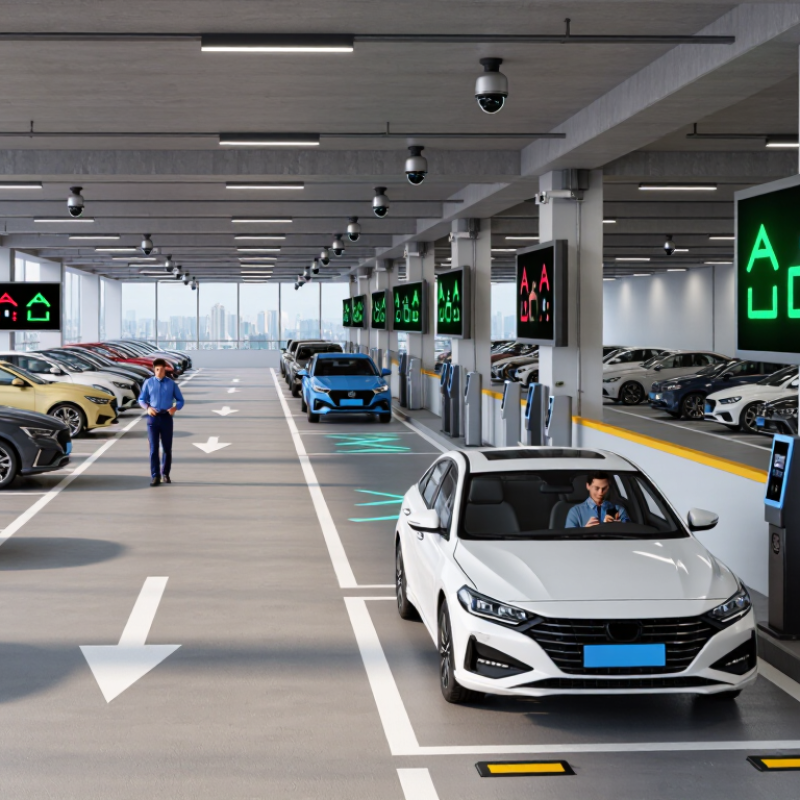
A Smart Parking System uses sensors, cameras, connected signs, and software to help drivers find available spaces. Instead of circling each aisle, a driver may check an app or roadside display for current availability. Small sensors mounted in a space or overhead can detect whether a vehicle is present. Their readings travel through a network to a central platform, which updates maps and parking guidance. For example, a garage may show floor-by-floor occupancy, while a street system may indicate curbside spaces. The same interface can reduce guesswork, but it cannot guarantee the nearest space will remain open.
The process sounds simple. In practice, it depends on reliable data. The platform can combine occupancy updates with location details, time limits, and payment options, depending on the site. Drivers receive directions to a space, while operators can review demand and manage facilities from a dashboard. Some systems also support reservations or alerts, but features vary by provider and location. A Smart Parking System does not create extra spaces; it helps people use existing ones more efficiently. Sensors may report late, lose connection, or misread a vehicle, so clear signs and occasional staff checks still matter. That detail is easy to overlook. For cities, campuses, hospitals, and shopping centers, the value is practical: less uncertainty at the curb, better visibility into parking patterns, and potentially fewer unnecessary loops. Results depend on installation quality, maintenance, and how drivers use the information. Smart parking is useful, not flawless. Understanding its parts makes it easier to judge what a system can—and cannot—do.
A smart parking system uses sensors, cameras, payment tools, and software to show which spaces are available. Its purpose is practical: help drivers find a legal, open bay without circling every level of a garage. That sounds simple. It is not.
The core components are space-detection devices, a communications network, and a management platform. Sensors mounted above or beneath a bay detect occupancy; cameras can read several spaces at once, though poor light or blocked views may reduce accuracy. Data travels through a wired or wireless network to software that updates signs, maps, and parking staff dashboards. Drivers may see availability on a web page or app, then pay through a digital kiosk or other payment channel. The system can also track occupancy over time, helping operators adjust signs, staffing, or rates. But data needs regular checks. A sensor can mark a space open when a vehicle is parked awkwardly.
The need is measurable. INRIX’s 2017 Global Parking Pain study estimated that U.S. drivers spend 17 hours annually searching for parking, with an average cost of $345 per driver.
Those figures describe reported parking pain, not guaranteed savings from smart systems. A useful installation depends on reliable detection, clear signs, accessible payment options, and staff who respond when equipment fails. Data collection also deserves restraint: operators should gather only what the service needs and explain how long records remain stored.
A smart parking system uses sensors to report whether individual spaces are occupied. INRIX’s 2017 Parking Pain study estimated that U.S. drivers spend an average of 17 hours each year searching for parking. Sensors can help drivers find open spaces faster, but only when their readings are dependable.
A magnetic sensor, often installed in the pavement, detects changes in the local magnetic field when a vehicle arrives. Ultrasonic sensors mounted overhead measure the distance to the surface below; a parked car changes that reading. A small controller processes the signal and sends an occupancy update wirelessly to a sign or management platform. The status may update within seconds. Not perfect, though: poor installation, battery issues, or unusual vehicle shapes can cause missed readings.
Tips: Check sensor placement and test accuracy with different vehicle sizes. Keep an eye on battery levels and communication gaps, too. A space can look empty on a screen while a sensor is still reporting yesterday’s car.
A smart parking system turns scattered observations into a live picture of available spaces. Sensors embedded in pavement detect whether a bay is occupied; cameras can count vehicles at entrances, while payment machines record transactions. Each reading carries a time and location. A gateway sends these records to a central platform, where software checks for duplicates, delays, and implausible changes.
Sensors can drift. Rain, dirt, or a vehicle parked across two bays may produce misleading readings. Systems therefore compare sensor events with entry counts and payment activity, then flag gaps instead of treating every record as certain. The 2017 Global Parking Survey estimated that U.S. drivers spent an average of 17 hours searching for parking each year. That figure gives operators a reason to measure availability, but it does not prove that any single sensor network can eliminate cruising.
After quality checks, the platform aggregates occupancy by block, facility, and time of day. Planners can see, for example, whether spaces fill before a nearby event or remain open on a side street. Personal identifiers should be separated from operational counts, and retention periods should be limited. Even then, a dashboard can hide local quirks: delivery vehicles, temporary closures, or a sensor that stopped reporting. Good decisions depend on field checks as well as clean charts.
A smart parking system helps drivers compare spaces before they reach a crowded street. Open its map and nearby garages or lots may show availability, prices, hours, and walking distance. A space beside the entrance can cost more than one three blocks away. Small details matter. Drivers can filter results by vehicle size, accessible spaces, or charging access when those options are listed. Availability often comes from sensors, cameras, or entry records, so the number shown may not update instantly.
After choosing a location, a driver can reserve a space for a set time, when reservations are supported. The confirmation may include an entry code, a plate-reading instruction, or a digital pass. Keep it handy. At arrival, follow the posted signs; older equipment or a blocked sensor can make entry less seamless than the app suggests. Payment may happen during booking or after parking, using the system’s available payment options. Check the rate, time limit, and cancellation terms before confirming. A live map is useful, but it is not a guarantee: events, construction, or a slow update can change what is open. Leave a little extra time. That modest buffer can matter more than a perfect prediction.
| What Is a Smart Parking System and How Does It Work? — How Drivers Find, Reserve, and Pay for Parking | ||||
|---|---|---|---|---|
| Stage | What the Driver Does | How the System Works | Information Used | Typical Result |
| 1. Find Parking | Opens a parking app or website and searches near a destination. | The system displays participating facilities or spaces and may sort results by distance, price, availability, or parking rules. | Facility location, operating hours, posted rates, space availability, and restrictions supplied by the parking operator. | The driver can compare suitable options before travelling. |
| 2. Check Availability | Reviews the number of spaces shown and any availability details. | Availability may be updated through entry and exit records, space sensors, cameras, or operator updates. The method and update frequency vary by facility. | Vehicle entry and exit counts, sensor readings, camera-based occupancy estimates, or manual updates. | The driver gets an estimate of whether parking is available; live counts may not guarantee a space. |
| 3. Reserve a Space | Selects a facility, arrival time, parking duration, and any available space or parking option. | The reservation service checks the facility’s rules and inventory, then records the booking and provides confirmation when the reservation is accepted. | Selected time window, vehicle details when required, reservation inventory, and facility terms. | The driver receives booking details, including the reservation period and entry instructions. |
| 4. Arrive and Enter | Follows the facility’s instructions, such as scanning a code, using a ticket, or presenting a reservation. | An entry system validates the booking or issues a ticket. Some facilities use a gate; others allow entry without a gate and verify parking later. | Reservation reference, entry time, vehicle or ticket information, and access rules. | Entry is recorded, and the driver proceeds according to the facility’s directions. |
| 5. Pay for Parking | Pays in advance, at a payment machine, through an app, or when leaving, depending on the facility. | The system calculates the charge using the facility’s rate rules and recorded parking time. Digital payment options may include a stored card or other supported payment method. | Rate schedule, parking duration, reservation details, applicable fees, and payment authorization. | The driver receives a payment confirmation or instructions for completing payment at the facility. |
| 6. Exit and Finish | Leaves within the paid or reserved period and follows the exit instructions. | The system records the exit and may match it with the entry, ticket, or reservation. If the stay exceeds the covered period, additional charges may apply under the facility’s rules. | Exit time, entry record, payment status, reservation period, and overstay policy. | The parking session is closed, and the space can be marked as available after the system updates. |
| 7. Manage the Facility | May review a receipt, reservation history, or parking instructions. | Facility staff use operational dashboards to review occupancy, transactions, and exceptions. Data accuracy depends on the equipment, integrations, and update practices in use. | Occupancy records, transactions, reservation activity, and system alerts. | Operators can monitor parking activity and address issues such as payment or access errors. |
A smart parking system gives operators a live view of spaces, arrivals, and payment activity. Sensors or cameras detect whether bays are occupied, while software brings that information into one dashboard. Staff can spot a busy zone without walking the entire lot. That saves time. It also helps them direct drivers toward open spaces before queues form.
At entry points, connected signs can display current availability, and digital payment records can reduce manual checks. Operators can compare occupancy by hour and adjust staffing around real demand. If a gate stops responding, an alert may help staff investigate sooner. Still, automation has limits. A sensor can report a space incorrectly, so teams need a way to verify problems on site. Human judgment matters.
Useful reports show more than daily totals. They can reveal repeated congestion near an entrance or low use in a distant row. Managers may use those patterns to revise signs, maintenance schedules, or space allocation. Data quality deserves regular attention; one faulty sensor can distort a small area’s figures. Imperfect, but useful.
What the chart shows: This illustrative example shows how a smart parking system can help operators monitor lot occupancy throughout the day. Sensors or cameras send availability data to an operator dashboard, supporting decisions such as directing drivers to open spaces and responding to busy periods. Values are sample data, not measurements from a specific car park.
Staverton is a British designer & manufacturer of contemporary office furniture.
Call us today: +44 (0)20 3794 1200
©2025 Staverton (UK) Ltd | Terms | Disclaimer | Cookies | Privacy

![]()
Please enter your details below to access the design files.