Staverton is a British designer & manufacturer of contemporary office furniture.
Call us today: +44 (0)20 3794 1200
©2025 Staverton (UK) Ltd | Terms | Disclaimer | Cookies | Privacy
![]()
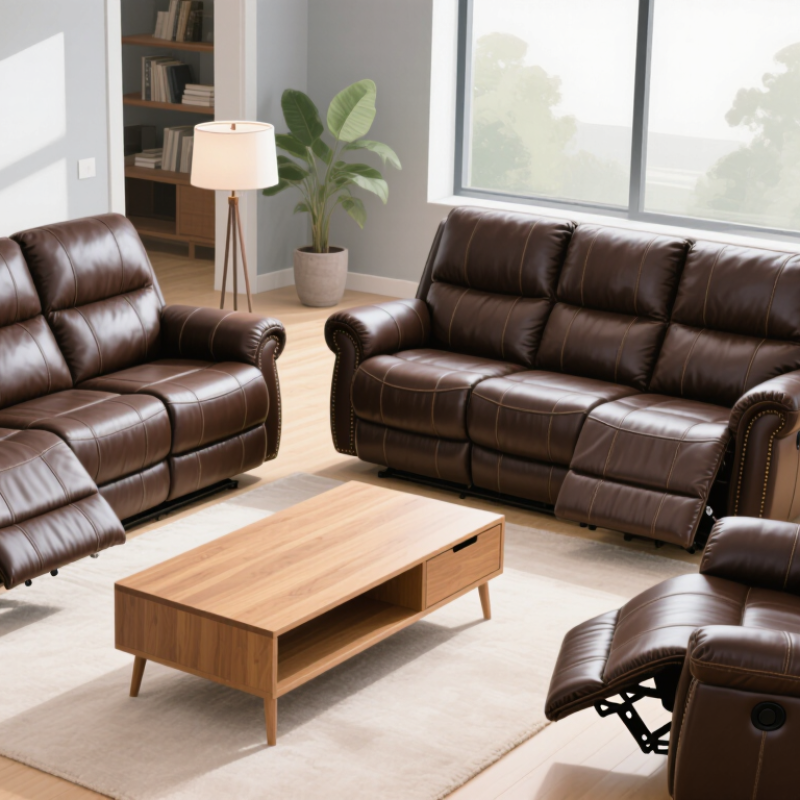
Choosing the right Leather Recliner Sofa Set starts with how it feels in your home, not how it looks under showroom lights. Furniture designer Charles Eames is often credited with saying, “The details are not the details. They make the design.” That idea fits recliners well. A smooth reclining motion, supportive armrests, and carefully finished seams can matter as much as the leather’s color. Small details count.
Before comparing styles, measure your room, doorways, and available space behind the sofa. Check whether each seat reclines independently, and confirm that the footrest supports your legs without pressing behind your knees. Genuine leather can develop character over time, while bonded or coated materials may have different care needs. Ask what each surface is made from; product labels can be less clear than they should be. Then test the cushions and controls in person, if possible. Sit for several minutes. A sofa that feels plush at first may offer too little support later.
This guide will help you compare leather types, reclining mechanisms, seat layouts, comfort, durability, and maintenance. It will also consider budget and room design, so the set suits daily use rather than a single photo. There is no perfect choice for everyone. A powerful recline mechanism may add cost, and a darker finish can show dust. Weigh the trade-offs against your habits, space, and priorities before deciding.
A leather recliner sofa set usually combines a reclining sofa with a matching loveseat or chair. Its shared upholstery creates a coordinated look, while each seat may recline independently. The main types differ by layout and mechanism: manual models use a side lever or body pressure; power models move with a button; wall-hugger designs need less clearance behind them. Small distinction, big effect.
Material matters too. “Genuine leather” describes real hide, but does not specify its surface quality or finish. Full-grain leather keeps more natural markings; corrected-grain leather is sanded and treated for a more even appearance. Grand View Research valued the global furniture market at about $677.1 billion in 2022. That broad figure shows the industry’s scale, not the popularity or quality of recliners. A market report cannot tell you whether a sofa will fit your doorway—or feel comfortable after an hour.
Tips: Measure the room and doorway, then check the recliner’s full open depth. Sit in each seat if possible. Note where seams, controls, and footrests sit; small details can become annoying. And leather can feel cool at first. That may matter more than expected.
Start by matching the sofa configuration to the number of people you want to seat. A loveseat typically seats two, a standard sofa three, and a larger sectional can offer six or more seats. Actual capacity varies by design, so check the dimensions and seat layout before choosing a leather recliner set.
Before choosing a leather recliner sofa set, measure the room with the seats fully extended. A sofa that fits against the wall upright may block a doorway when reclined. Mark its footprint with masking tape, then check walking paths, windows, and nearby tables. Count regular users, too. A two-seat layout may feel roomy until guests arrive. AARP’s 2024 Home and Community Preferences Survey found that 75% of adults aged 50 and older want to remain in their homes as they age. That makes easy entry, firm arm support, and reachable controls worth considering—not just plush cushions.
Set a spending limit for the full setup, including delivery and any protective care products. The U.S. Bureau of Labor Statistics’ 2023 Consumer Expenditure Survey reports roughly $3,000 in annual household furnishings and equipment spending per consumer unit. This broad category is not a recommended sofa budget, but it helps put one purchase in context. Compare frame construction, upholstery thickness, reclining mechanisms, and warranty coverage at the same price level. Test the seats in person if possible. Sit, recline, and stand up. One detail is easy to miss: leather can feel cool in winter and warm against bare skin in summer. I would revisit that comfort trade-off before ordering.
How to Choose the Best Leather Recliner Sofa Set?
Comparing Leather Grades, Finishes, and Upholstery Options
Full-grain leather retains its natural surface, so small scars and creases remain visible. Top-grain leather is usually sanded or corrected for a more uniform look. Split leather often has an applied finish; inspect the product description carefully, since “leather” alone tells you little. Aniline finishes feel soft and show natural markings, but can stain more easily. Pigmented finishes offer more consistent color and usually simpler cleanup. That trade-off matters near snacks, pets, or sunny windows.
Compare upholstery options by how you actually use the sofa. ACT’s upholstery guidelines cite 15,000 double rubs for low-traffic woven fabrics and 30,000 for high-traffic use. These benchmarks apply to textiles, not leather, and do not guarantee a specific lifespan. Fabric panels may feel cooler, while leather-match upholstery can reduce cost but may wear differently across surfaces. Ask what covers the seat, arms, and back—not just the parts you can see.
Tips: Feel a sample in daylight. Ask for samples. Rub a drop of water on an inconspicuous spot only if the maker permits it; finishes react differently. Check seams and recliner stress points, too. A perfect-looking swatch is not the whole sofa.
Leather quality and surface finish are separate considerations: the hide describes the material, while the finish affects its look, feel, and protection. Terms and construction can vary by manufacturer, so check the product specification and warranty.
| Material or finish | What it is | Look and feel | Wear and maintenance | Relative cost | Suitability for a recliner sofa set | What to check before buying |
|---|---|---|---|---|---|---|
| Full-grain leather | Made from the outer surface of the hide, with its natural grain largely intact and no sanding to remove surface marks. | Natural grain and individual markings remain visible. It may develop a patina with use. | Can be long-wearing when well made and cared for. Natural variations and some marks are part of its appearance; follow the maker’s cleaning instructions. | High | Best for buyers who value natural character and are comfortable with variation. | Confirm which sofa surfaces use full-grain leather; a set may use different materials on hidden or less-contact areas. |
| Top-grain leather | Uses the outer layer of the hide. Its surface may be lightly sanded or corrected for a more even appearance. | Usually smoother and more consistent than full-grain leather, though texture and softness vary by finish. | Generally a practical choice for frequently used seating. Protection depends on the coating or finish applied. | Medium to high | A versatile option for everyday family rooms when the finish suits the household. | Ask whether it is protected or unprotected, and whether the same leather covers seats, arms, and footrests. |
| Corrected-grain leather | A hide surface that has been sanded or otherwise corrected and embossed to create a more uniform grain. It is often sold as top-grain leather. | More regular in pattern; the surface can feel less natural than uncorrected leather. | A pigmented protective finish can make routine cleaning easier, but performance depends on the specific finish and care. | Medium | A good candidate for buyers who prefer a consistent appearance and easier day-to-day care. | Check the product’s exact leather description rather than relying on the word “grain” alone. |
| Split leather | Made from a lower layer of the hide after it is split from the top grain. It may be coated or embossed to resemble grain leather. | Appearance and feel depend strongly on the applied coating; it is not the same material as top-grain leather. | Wear resistance varies with the coating and construction. Avoid assuming it will perform like full-grain or top-grain leather. | Low to medium | Can suit budget-conscious buyers when the specific construction and warranty are clearly stated. | Ask where split leather is used and what surface coating it has. |
| Aniline finish | A transparent dye finish that leaves the natural surface visible and typically adds little surface protection. | Soft, natural-looking, and varied in color; hide markings remain easy to see. | More susceptible to staining, fading, and visible wear than heavily protected finishes. Requires careful placement and cleaning. | High | Best for lower-traffic rooms or owners who prioritize a natural feel over stain resistance. | Ask about sunlight exposure, recommended cleaning, and whether the leather has any additional protection. |
| Semi-aniline finish | Dyed leather with a light surface pigment or protective treatment that retains some natural grain visibility. | Natural-looking, with a more even color and a little more surface protection than aniline leather. | Offers a balance of appearance and everyday practicality; prompt care is still important for spills. | Medium to high | A balanced option for regular use when a natural appearance is still desired. | Protection levels differ, so compare care instructions and warranty coverage. |
| Pigmented or protected finish | Uses surface pigment and a protective topcoat to create a more uniform color and a more resistant surface. | Consistent color and grain; may feel less natural than aniline or semi-aniline leather. | Typically easier to wipe clean and more resistant to everyday marks, but not immune to damage, heat, or harsh cleaners. | Low to medium, depending on the leather underneath | Often practical for busy households and frequently used reclining seats. | Confirm the underlying leather type and use only cleaners approved for its finish. |
| Nubuck | Leather with a lightly buffed outer grain surface, creating a fine nap. | Soft, velvety texture with a matte appearance. | The nap can show marks and is generally more vulnerable to liquid and dirt than a protected, smooth finish. | Medium to high | Best for buyers willing to provide more careful maintenance and protect the sofa from spills. | Ask for specific cleaning guidance; ordinary leather creams may not be suitable. |
| Leather match | A sofa construction that uses leather on specified contact areas and a matching non-leather material on other areas. Exact placement varies. | Designed to coordinate visually, but the leather and synthetic sections may feel or age differently. | Care requirements differ by material. A damaged section may not age or repair like the leather portions. | Low to medium | Can offer a lower-cost way to get leather on the main seating surfaces. | Get a written list of which parts are leather and which are synthetic, including sides and backs. |
| Bonded leather | A reconstituted material made using leather fibers or scraps combined with binders and a surface layer. Composition and labeling rules vary by market. | Often has a uniform, coated appearance; feel varies by product. | Surface wear and peeling can occur, and durability varies considerably. It is not equivalent to a continuous hide of top-grain leather. | Low | Consider only when the construction, expected use, and warranty are acceptable for the price. | Read the material description carefully and ask how the upholstery is constructed and covered by warranty. |
| Performance upholstery fabric | A non-leather fabric selected or treated for easier cleaning or resistance to common household stains; properties vary by fabric. | Available in many textures and colors; does not have the feel or aging characteristics of leather. | Some fabrics are designed for easier care, but results depend on fiber, weave, and treatment. Follow the care label. | Low to medium | A useful alternative when fabric comfort, color choice, or a lower price matters more than a leather surface. | Check cleaning codes, stain-treatment details, and whether the fabric is used throughout the sofa set. |
A leather recliner sofa set should move smoothly, not merely look impressive in a showroom. Test each seat separately. Does the footrest rise without a jerk? Can you stop the backrest at a comfortable angle? Manual mechanisms should feel controlled, while powered models should respond consistently to their switches. Listen for grinding or clicking. A quiet mechanism is not proof of quality, but unusual noise deserves attention.
Comfort depends on more than soft cushions. Sit for several minutes with your feet raised, then check whether your lower back and neck feel supported. Your heels should not hang awkwardly, and the armrests should suit your usual sitting position. Leather may feel cool at first and soften with use. That can be pleasant, though personal preference varies; a quick showroom sit is not always enough.
Inspect the frame, joints, stitching, and recliner hardware. Ask what materials support the frame and whether the moving parts can be serviced. Look for even seams and cushions that return to shape after pressure. Also measure doorways and the room’s clearance behind the sofa. Details matter. I admit that attractive leather can distract from a stiff mechanism or shallow seat. Take notes, compare models, and trust repeated comfort checks over a polished display.
Measure the room before comparing leather recliner sofa sets. Include the sofa’s full reclined depth, not only its upright footprint. Leave space behind the back and beside the footrests, then check doorways, stairs, and tight turns. Measure twice. A set that fits the living room may still be difficult to deliver.
Leather varies in texture, finish, and care needs. Ask whether the upholstery is full-grain, corrected-grain, or leather-match, and follow the maker’s cleaning instructions. A soft cloth and prompt attention to spills help, but harsh cleaners can damage finishes. Sunlight may fade leather over time, so consider window placement. Small creases are normal; perfect uniformity is not. That detail is easy to overlook.
Read the warranty closely. Check what it covers, how long coverage lasts, and whether reclining mechanisms, frames, and upholstery have different terms. Ask how to request service and whether transport costs apply. Compare the full price with expected upkeep, construction, comfort, and useful warranty coverage. Sit in each seat if possible, and test the recline controls. A low price can be appealing, though it may not tell the whole story. On the other hand, a higher price does not guarantee a better fit for your home.
Staverton is a British designer & manufacturer of contemporary office furniture.
Call us today: +44 (0)20 3794 1200
©2025 Staverton (UK) Ltd | Terms | Disclaimer | Cookies | Privacy
![]()
Please enter your details below to access the design files.