China Best Sesame Grey Granite Supplier for Global Buyers?
For global buyers, choosing a China-based Sesame Grey Granite supplier is about more than comparing prices. The stone’s grey field, darker mineral flecks, and natural variation can look different across slabs. A small sample helps, but it cannot show every change in a full shipment. Ask for recent photos or videos of the actual material, with slab dimensions and finish clearly shown.
Details matter. Check how the supplier grades slabs, inspects polished surfaces, and protects edges before packing. Request information about block or quarry origin where available, production capacity, lead times, and export packing. Clear answers are useful; vague promises are not. A reliable supplier should explain what can vary, including shade, grain, and occasional natural marks. No supplier is perfect. Buyers should leave room for inspection and confirm acceptance standards before production begins.
Compare quotations on the same basis: thickness, finish, tolerances, packaging, and delivery terms. A lower figure may exclude important steps. Ask for references or evidence of previous shipments, while checking that documents and product descriptions match the order. Small checks now can prevent costly surprises later. This guide considers practical ways to assess Chinese suppliers, communicate specifications, and judge whether Sesame Grey Granite suits a particular project. The right choice depends on the intended use, budget, and acceptable variation—not on a bold “best” claim alone.
What Is Sesame Grey Granite and Where Is It Quarried?
Sesame Grey Granite is a commercial name, not one fixed geological variety. It usually describes a gray, coarse-grained stone flecked with darker minerals and pale feldspar. Under close inspection, the grains look like tiny salt-and-pepper dots. In Chinese trade, the name is often linked to Fujian gray granites, including G603-type material. Yet names vary between sellers, and the label alone cannot confirm a quarry. That matters.
Geologically, granite forms when magma cools slowly underground, allowing visible crystals of quartz, feldspar, and mica to develop. Quarry faces may show subtle shifts in tone, grain size, or dark mineral content. Even slabs cut from nearby blocks can differ. The U.S. Geological Survey’s Mineral Commodity Summaries 2024 estimates U.S. dimension-stone production at about 2.5 million metric tons in 2023, showing the scale of the broader stone market; it does not identify Sesame Grey output specifically. Buyers should request the quarry location, block or lot details, and an unsealed sample. A polished showroom sample can look more uniform than installed stone, especially under warm lighting. I would not rely on the trade name alone.
Key Characteristics and Common Finishes of Sesame Grey Granite
Key Characteristics and Common Finishes of Sesame Grey Granite
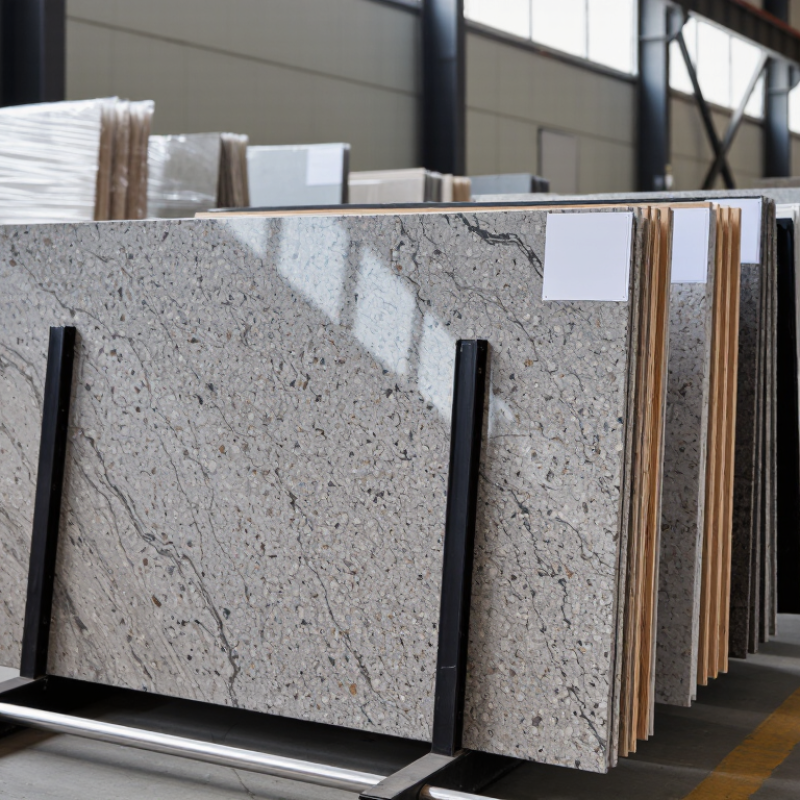
Sesame Grey granite typically has a cool grey background with scattered black and pale mineral grains. Its speckled pattern gives large surfaces a quiet, textured look. Grain size and shade can vary between blocks, so a small sample may not represent an entire shipment. The stone is hard and suitable for many indoor and outdoor uses, but its porosity and performance can differ by source. Check the actual slab, not just a photograph.
Tips: Ask for photos of several slabs in natural light. Confirm the finish and thickness, and request a sample before approving a large order. Small differences are normal.
Polished surfaces bring out deeper tones and are easy to wipe clean, though they can show water marks. Honed finishes look softer and less reflective. Flamed granite has a rougher texture, often chosen for outdoor paving where grip matters. Leathered finishes add subtle texture, but cleaning can take more effort. One detail buyers sometimes overlook: the same stone can look quite different under warm indoor lighting. A finish sample viewed at the installation site helps avoid surprises.
Sesame Grey Granite: Key Characteristics and Common Finishes
Mineral hardness in granite is shown on the Mohs scale. Values for plagioclase feldspar and biotite use the midpoint of their typical ranges; mineral composition varies between stones and quarries. Common surface finishes include polished, honed, flamed, and bush-hammered. Finishing changes the surface appearance and texture, not the minerals’ Mohs hardness.
Typical Applications in Residential and Commercial Projects
Sesame grey granite suits projects that need a calm, durable surface without a uniform, manufactured look. Its grey ground and scattered darker grains work well on kitchen counters, bathroom vanities, and window sills. In living areas, honed or polished slabs can also form fireplace surrounds or durable floor tiles. The exact pattern varies from slab to slab. Check several full-size pieces before approving a layout.
For residential kitchens, ask the fabricator to confirm slab thickness, edge details, and the location of seams around sinks and cooktops. A polished finish is easy to wipe, while a honed surface has a softer appearance and may show marks differently. Test samples with common household spills. Small samples can hide real variation.
Commercial projects use this granite for reception desks, hotel counters, lobby floors, and stair treads. Its speckled pattern can disguise minor everyday dust, though it does not remove the need for regular cleaning. For busy entrances, review the finish’s slip performance and plan suitable maintenance with the installer. Granite is not ideal for every design; its natural variation may complicate large, tightly matched surfaces. Good planning helps, but it cannot make every slab identical.
How to Evaluate a Sesame Grey Granite Supplier in China
Evaluating a sesame grey granite supplier in China starts with traceable stone, not polished sales photos. Ask for the quarry or block source, current slab images, and a physical sample. Grey backgrounds can shift toward blue or brown, while black grains and mineral flecks vary between blocks. Compare several slabs under daylight and warm indoor lighting. Check for filled fissures, resin treatment, uneven thickness, and chipped edges. Small differences matter.
Request written specifications for thickness, finish, dimensional tolerance, water absorption, and packing method. A reliable supplier should explain how these are checked and provide recent inspection records. For a large order, approve a production sample and arrange inspection before loading. Check crate photos, slab labels, and loading records to connect the approved material with the shipment.
Ask how quality claims are handled and what evidence is needed. That conversation can reveal more than a low quotation.
Still, one sample cannot represent every block. Natural variation remains, even after careful selection. It is easy to call every difference a defect, but project drawings should define acceptable color and grain ranges. Put critical tolerances in writing.
Ordering, Quality Control, and International Shipping for Global Buyers
For global buyers, sesame grey granite should be ordered against a clear specification, not a color name alone. Ask for the quarry or block reference, finish, thickness, dimensions, edge details, and acceptable shade range. Request current photos under neutral lighting, plus samples from more than one slab. Natural flecks and tone shifts are normal. A sample cannot show every variation in a full container.
Quality control works best before packing. Confirm measurement points, surface finish, cracks, chipped corners, and batch consistency in writing. Have the inspection record include labeled photos and the number of pieces checked. Small detail. Big difference. Even careful checks cannot make natural stone perfectly uniform; expecting that may create avoidable disputes. I would rather see a realistic shade range agreed early than a beautiful sample treated as a guarantee.
Shipping needs equal attention. The UNCTAD Review of Maritime Transport 2024 reports that over 80% of world merchandise trade by volume moves by sea, making secure packing and timing central to stone orders. Specify crate construction, piece labels, loading photos, gross weight, and document requirements before dispatch. Ask the supplier to confirm the port, estimated transit time, and who handles each shipping charge. Delays can still happen. Plan installation schedules with a buffer, and check the delivered pieces before cutting or fixing them.