China Top 10 Remote Controlled Animatronics Suppliers

Remote Controlled Animatronics combine mechanical design, control systems, materials, and performance. For buyers, the best supplier is not always the one with the largest catalog. Reliability matters. So does clear communication. A moving dinosaur under exhibition lights may look impressive, but its wiring, service access, and operator controls matter just as much. Garner Holt, founder of Garner Holt Productions, offers a useful standard through his work: motion should reveal character, not distract from it. That principle helps frame this guide to China’s top 10 Remote Controlled Animatronics suppliers.

The companies featured should be assessed through practical evidence: documented projects, customization capabilities, material choices, control options, and after-sales support. Ask how a supplier tests movement before shipping. Request close-up photos of joints, cable routing, and finished surfaces. Check whether operators can adjust speed and movement sequences without specialist tools. Small details count. A smooth head turn feels different from a sudden mechanical snap. A clear maintenance plan can matter more than another dramatic feature.

This list is a starting point, not a final verdict. Supplier capabilities change, and a polished website cannot prove production quality. Some buyers may also overlook installation needs or spare-part access. That is easy to do. Compare specifications carefully, request current references, and confirm which services are included in writing. The right partner should explain limitations as clearly as strengths. A little skepticism helps.
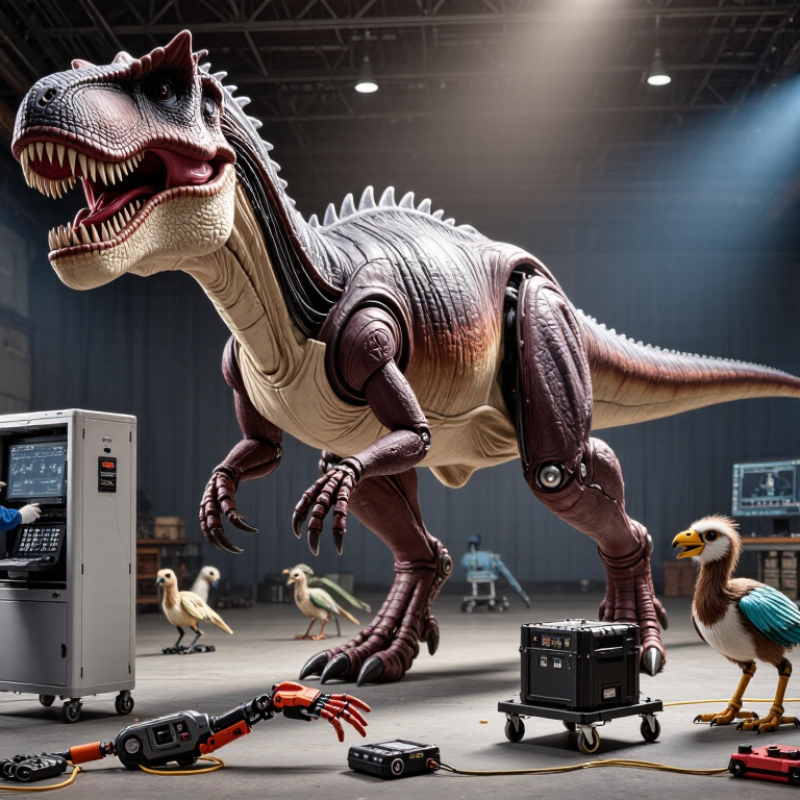
China Top 10 Remote Controlled Animatronics Suppliers

What Remote-Controlled Animatronics Are and How They Work

China Top 10 Remote Controlled Animatronics Suppliers

What Remote-Controlled Animatronics Are and How They Work

Remote-controlled animatronics are mechanical figures whose movements are operated from a distance. A handheld transmitter sends commands to a receiver inside the figure. The receiver directs servos or geared motors to move parts such as the eyes, jaw, neck, or arms. Some larger systems use pneumatic mechanisms, which need a suitable air supply. A moving jaw may also be timed with recorded speech or sound effects.

The response depends on the control system, moving parts, and surroundings. For example, a figure placed near metal structures or other electronic equipment may not respond as expected. Operators should test its range and movement before opening it to visitors. Check cables, joints, and emergency stops regularly, especially on figures that run for long periods. Even well-designed equipment can need adjustment; a small loose connection may cause uneven motion.

Tips: Ask suppliers about control range, maintenance access, and replacement parts. Test the figure in the intended space, not only in a workshop. Keep hands clear of moving joints during operation. A little planning helps, though no setup is perfect.

How China’s Remote-Controlled Animatronics Industry Is Structured

China’s remote-controlled animatronics industry is better understood as a supply chain than a single factory category. It links mechanical workshops, electronics suppliers, sculpting teams, control-system engineers, and project integrators. Some firms build motors, frames, or controllers; others combine them into a moving dinosaur, themed display, or interactive installation. Buyers should check who handles integration and after-sales repairs, not just who assembles the figure.

The International Federation of Robotics’ World Robotics 2024 report recorded 276,288 industrial robot installations in China in 2023, about 51% of global installations. This is a useful indicator of the country’s broader automation capacity, not a count of animatronic units. Not a direct count. Still, it matters. A mature supplier base for motion control and manufacturing can support animatronic production, while custom skin, expressive movement, and quiet operation require more specialized work.

In practice, suppliers often divide into component makers, product manufacturers, and integrators serving museums, parks, exhibitions, and commercial spaces. A project may involve a metal frame, several actuators, a programmable controller, and a silicone or fabric exterior. Ask for cycle testing, spare-part details, and maintenance instructions. A short demonstration can hide rough motion or noisy joints. The structure is efficient, but not always seamless: responsibility can become unclear when several workshops share one build.

How to Evaluate China’s Top 10 Remote-Controlled Animatronics Suppliers

Evaluating China’s Top 10 remote-controlled animatronics suppliers takes more than comparing photos and quoted prices. Ask how each model moves: which joints are powered, how cables are routed, and whether the controller allows smooth speed changes. Request a live demonstration with the creature turning, blinking, and repeating a sequence. Details matter. A sharp video can hide jerky movement or noisy motors.

Review materials and build quality closely. Ask for frame specifications, skin samples, and written guidance on operating limits. If possible, inspect a finished unit and look for loose fasteners, uneven seams, or exposed wiring. A single short test cannot prove long-term reliability. Request endurance-test records, maintenance intervals, and examples of replacement-part availability. For outdoor installations, confirm how the enclosure handles rain, dust, and temperature changes.

Check whether the supplier provides clear drawings, control-system documentation, and practical troubleshooting support. Ask how faults are diagnosed and which components commonly need adjustment after shipping. Compare response times using specific technical questions, not sales promises alone. Request references for projects with similar size and motion requirements, then verify the details independently. No checklist is perfect. A factory visit can also miss problems that appear only after months of daily use.

China Top 10 Remote Controlled Animatronics Suppliers - How to Evaluate China’s Top 10 Remote-Controlled Animatronics Suppliers

Use this evidence-based scorecard to compare suppliers. It evaluates ten purchasing criteria rather than asserting an independently verified ranking of specific companies. Request comparable documents, videos, and quotations from each supplier before assigning scores.

No. Evaluation dimension Suggested weight Evidence to request How to assess Score (1–5)
1 Manufacturing capability 15% Production-area video or audit, process flow, and examples of comparable completed units. Check whether fabrication, assembly, wiring, finishing, and testing responsibilities are clearly explained and supported by evidence. _____
2 Control system and motion performance 15% Live operating demonstration, control-system description, motion sequence, and stated operating limits. Confirm that the demonstrated movements, control method, repeatability, and operating speed match the project specification. _____
3 Customization and engineering support 12% Requirement review, drawings or renderings, revision process, and written scope of included engineering work. Assess how clearly the supplier translates requirements into dimensions, movement, appearance, interfaces, and change control. _____
4 Safety and risk management 12% Risk assessment, emergency-stop details, guarding or access controls, and operating instructions relevant to the intended installation. Check that hazards and protective measures are documented. Confirm applicable requirements for the destination market and use environment. _____
5 Quality assurance and testing 12% Inspection plan, functional-test records, acceptance criteria, and sample inspection or factory-acceptance-test procedure. Look for documented checks against agreed specifications and a clear process for recording and correcting defects before shipment. _____
6 Materials and finish suitability 8% Material specifications, finish samples, maintenance guidance, and suitability information for indoor or outdoor installation. Compare proposed materials and finishes with the project’s exposure, cleaning, durability, appearance, and maintenance needs. _____
7 Warranty, spare parts, and after-sales support 8% Written warranty terms, spare-parts list, troubleshooting process, and support contact or response procedure. Verify coverage, exclusions, parts availability arrangements, and how technical issues will be handled after delivery. _____
8 Lead time and project coordination 7% Milestone schedule covering design approval, production, testing, packing, and dispatch. Assess whether assumptions, customer approvals, dependencies, and schedule updates are stated clearly in the quotation or project plan. _____
9 Export documentation and compliance readiness 6% Proposed shipping documents, electrical specifications, installation information, and market-specific conformity documents where applicable. Confirm which documents can be supplied and whether they match the product configuration and destination-market requirements. _____
10 Verifiable project experience 5% Relevant project references, installation photos or videos, and permission to verify comparable work where available. Check that examples are relevant to the required scale, operating environment, and level of remote control; distinguish verified references from portfolio images. _____
Total suggested weight 100% Weighted result = sum of (criterion score ÷ 5 × criterion weight). _____

Scoring guide: 1 = no adequate evidence; 2 = limited or incomplete evidence; 3 = meets the stated requirement; 4 = strong, well-documented evidence; 5 = independently verifiable evidence that exceeds the requirement. Apply the same project specification and scoring method to every supplier.

Profiles of Ten Leading Chinese Remote-Controlled Animatronics Suppliers

A useful profile of ten Chinese remote-controlled animatronics suppliers should compare more than catalog photos. Buyers need to examine movement range, control options, skin finish, maintenance access, and documented testing. A dinosaur’s jaw may look convincing, yet jerky neck motion can weaken the whole scene. Details matter.

The International Federation of Robotics’ World Robotics 2024 report recorded 276,288 industrial robot installations in China in 2023, about 51% of global installations. This figure describes industrial robots, not animatronics; it offers context for China’s broader automation supply base, not proof of any supplier’s quality. The ten profiles should therefore distinguish verified capabilities from promotional claims. Ask for close-up motion videos, wiring diagrams, spare-part lead times, and references for comparable projects. Check whether a supplier can explain controller limits and routine servicing in plain language. One weakness in this approach: public profiles rarely reveal long-term failure rates. A polished demo is not endurance evidence. Require a clear test scope, and treat unanswered technical questions as meaningful information.

China’s Remote-Controlled Animatronics Suppliers: 10 Profiles

Each bar represents one anonymized supplier profile. The chart counts profiles only; it does not compare company performance or imply supplier rankings.

How to Compare Suppliers’ Products, Customization, and Support

When comparing China’s top 10 remote controlled animatronics suppliers, look beyond dramatic showroom videos. Ask for close-up footage of the eyes, jaw, neck, and control response during a full operating cycle. Details matter. Check the frame material, skin flexibility, access panels, and cable routing. These affect maintenance as much as appearance. Request operating noise, power requirements, and cycle limits in writing. A creature that moves smoothly for thirty seconds may behave differently after hours of repeated use.

Customization should be specific, not just described as “fully tailored.” Share a reference image and ask which features can change: height, color, movement range, sound, or control method. Confirm the prototype approval process and what happens if the finished piece differs from the approved sample. Ask for evidence. Support matters after delivery, too. Compare warranty terms, spare-part availability, troubleshooting instructions, and response times. A supplier may offer strong engineering but limited long-term service; that trade-off deserves attention. If possible, arrange a live video inspection before shipment and test the remote from a realistic distance. Even careful comparisons leave some uncertainty, especially about durability, so document assumptions and responsibilities before placing an order.