China Best Electric Marine Toilet for Boats?
A boat’s toilet is easy to overlook until the water is choppy, the cabin is tight, or the system stops working. Choosing an Electric Marine Toilet means weighing more than convenience. Bowl dimensions, flushing noise, water use, power draw, hose routing, and access for servicing all matter. A compact unit may fit neatly beside a narrow passage, yet leave little room to reach a pump or wiring connection. Small details become daily realities.
The market context is substantial, but it needs careful interpretation. NMMA’s 2023 Recreational Boating Economic Impact Study estimated the U.S. recreational boating industry’s annual economic contribution at $230.3 billion, supporting about 812,000 jobs. Those figures describe the broader industry, not toilet sales or product performance. They do, however, show why dependable onboard equipment matters to owners and marine businesses. The International Maritime Organization’s MARPOL Annex IV addresses sewage from ships, while requirements and exemptions can vary with vessel type and location. Buyers should confirm which rules apply to their own boat and operating area.
So, what makes one model the best? There is no universal answer. A quiet flush may suit a family cruiser, while straightforward maintenance may matter more on a boat used for longer trips. Product specifications are useful, but they cannot replace checking installation space, electrical compatibility, and the manufacturer’s service guidance. Some comparisons make performance sound simple. It isn’t. This guide examines the practical trade-offs behind choosing the right Electric Marine Toilet for a boat.
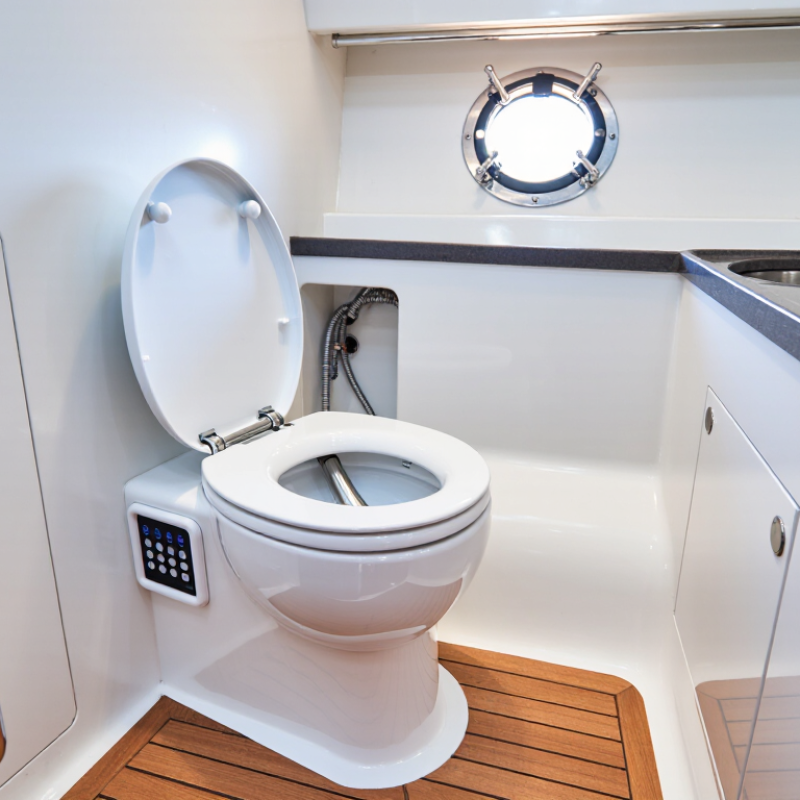
Electric Marine Toilet Basics: Common 12-V and 24-V DC Systems
Electric marine toilets commonly run on 12-volt or 24-volt DC power. The correct choice depends on the boat’s electrical system, not simply the toilet’s size. A 12-volt model suits many smaller vessels, while 24-volt systems are common on larger boats. Check the unit’s rated voltage before connecting it; a mismatch can damage electrical components.
Voltage is only part of the picture. Pumps can draw a brief surge when starting, so wiring, circuit protection, and battery capacity must suit the manufacturer’s specifications. Long cable runs may cause voltage drop.
That matters.
A toilet near the bow, for example, may need different wiring considerations from one beside the battery bank. Keep connections dry, secure, and accessible for inspection.
Small details count.
Before installation, compare the toilet’s current draw with the boat’s available power and check the recommended fuse and cable size in its manual. A multimeter can help confirm voltage at the connection under load. If the reading falls noticeably when the pump runs, investigate the wiring or battery condition rather than assuming the toilet is faulty. I would still double-check the installation plan with a qualified marine electrician; onboard systems can be less tidy than diagrams suggest.
How Electric Flush Cycles Move Waste to a Holding Tank
An electric marine toilet moves waste through a short, controlled sequence. Pressing the flush switch activates a water valve and a discharge pump. In macerating systems, a cutter breaks down solids before the pump pushes the mixture through a hose. The waste then enters a holding tank, where a vent prevents pressure from building. Check valves help limit backflow, but they cannot compensate for poor hose routing or worn seals.
Small details matter. A rising hose loop, loose clamp, or blocked vent can interrupt the cycle or cause odors. Keep discharge lines short where practical, and inspect connections for dampness or staining. ISO 8099-1:2018 provides technical requirements for marine toilet systems and their holding-tank connections. It is a useful design reference, though installation details still depend on the vessel.
Water use varies by toilet and flush setting, so check the unit’s published cycle specifications before planning tank capacity. The U.S. Coast Guard’s 2022 Recreational Boating Statistics reported roughly 11.9 million registered recreational vessels, underscoring how common onboard systems are. More vessels mean more varied installations, not one universal setup. Test several flushes while the tank is well below full, and listen for changes in pump pitch. That sound can reveal trouble early. It is not a perfect diagnostic, but it is easy to overlook.
Comparing China-Made Models by Power Draw, Bowl Size, and Water Use
China-made electric marine toilets can look similar in catalogs, but their operating demands differ. Compare rated voltage, current draw during flushing, and any standby consumption. A unit drawing more current may need heavier wiring or a shorter cable run. Check the installation manual against your boat’s electrical system, not just the headline wattage. Small details matter.
Bowl size affects comfort and cabin layout. Measure the available footprint, including room to sit and open nearby lockers. A compact bowl can suit a narrow head, though it may feel cramped on longer trips. Check seat height and the shape of the rim, too. Dimensions on a product sheet do not always convey how it feels in a tight space.
Water use per flush influences tank capacity and pump-out frequency. Compare the stated amount per cycle, then consider whether the toilet offers adjustable flushing. A lower figure may help conserve fresh water, but the bowl and discharge line still need an effective rinse. Ask how the unit handles your planned plumbing setup. I would not decide from water use alone. Test the seat, if possible. Real measurements can be awkward to gather, and I have found that cabin space is easier to misjudge than a specification table suggests.
Wastewater Rules at Sea: MARPOL Annex IV’s 3- and 12-Nautical-Mile Limits
An electric marine toilet changes how sewage is moved, not where it may be discharged. Under MARPOL Annex IV, distance is measured from the nearest land, and discharge conditions depend on treatment. A flush button is not permission to discharge.
Sewage that is comminuted and disinfected using an approved system may generally be discharged more than 3 nautical miles from land, while the vessel is en route. Untreated or non-comminuted sewage generally requires a distance greater than 12 nautical miles, also while en route, with discharge kept at a moderate rate. These are not simple “offshore” labels. A chart, route, and holding-tank capacity all matter; a short coastal trip may offer no compliant discharge window.
Keep it contained. When distance or treatment conditions are not met, retain sewage in the holding tank and use an appropriate reception facility. Check the system’s approval and operating instructions before departure. Local rules and special-area requirements may be stricter, and Annex IV coverage depends on vessel size and voyage. It is worth checking rather than guessing: an electric toilet alone does not make a discharge compliant.
MARPOL Annex IV: Sewage Discharge Distance Limits
Minimum distance from the nearest land for the specified sewage discharge categories.
Under MARPOL Annex IV, sewage that has been comminuted and disinfected using an approved system may be discharged more than 3 nautical miles from the nearest land. Untreated sewage may be discharged more than 12 nautical miles from land, subject to the ship being en route and the applicable discharge-rate requirements. These are minimum distance thresholds, not blanket permission to discharge.
Checking Standards and Support: ISO 8099, Spare Parts, and Warranty Terms
When comparing an electric marine toilet, ask how its installation relates to ISO 8099, the standard for waste-water retention systems on small craft. A toilet alone does not prove that the complete onboard system meets the standard. Request the relevant test information, installation instructions, and details of any required hoses, valves, or holding tank. Check that the specified setup fits your boat, not just the product description. Paperwork matters.
Spare parts can determine whether a minor fault becomes a long delay. Ask whether the supplier stocks pumps, seals, control switches, and service kits, and confirm typical delivery times to your location. A clear parts diagram helps when the boat is away from a workshop. Warranty terms deserve the same scrutiny: check the coverage period, labor costs, exclusions for incorrect installation, and whether saltwater exposure affects coverage. Keep the receipt and installation records. Read the fine print. I would also ask who handles a claim and what evidence they need; support can sound reassuring until a repair is needed.