2026 Best Round Plastic Nursery Pot for Wholesale Buyers?
For wholesale buyers, a round plastic nursery pot is more than a container. It affects packing, shipping, bench spacing, and how reliably plants move through production. Small inconsistencies matter. A rim that catches on a tray can slow handling. Thin walls may flex when pots are stacked or filled.
The USDA National Agricultural Statistics Service reported approximately $6.7 billion in U.S. floriculture sales in its 2023 Floriculture Crops summary. That figure describes crop sales, not nursery-pot demand, but it shows the scale of the production sector these containers serve. Texas A&M horticulture economist Dr. Charlie Hall studies the economics of the green industry. His work makes production costs a relevant lens for evaluating wholesale supplies. However, no verifiable, pot-specific quotation from Hall was available for this introduction, so I will not invent one.
The best pot depends on the crop, growing cycle, and handling system. Compare usable volume, rim strength, drainage-hole consistency, and fit with trays—not just the listed diameter. Ask suppliers for samples, then test them with your actual growing mix and watering routine. Check the base, too. That detail is easy to overlook. A dependable round plastic nursery pot should perform consistently across batches, while meeting your price and storage needs. Even a careful specification cannot predict every real-world handling problem; trial orders remain worthwhile.
What Defines a Round Plastic Nursery Pot?
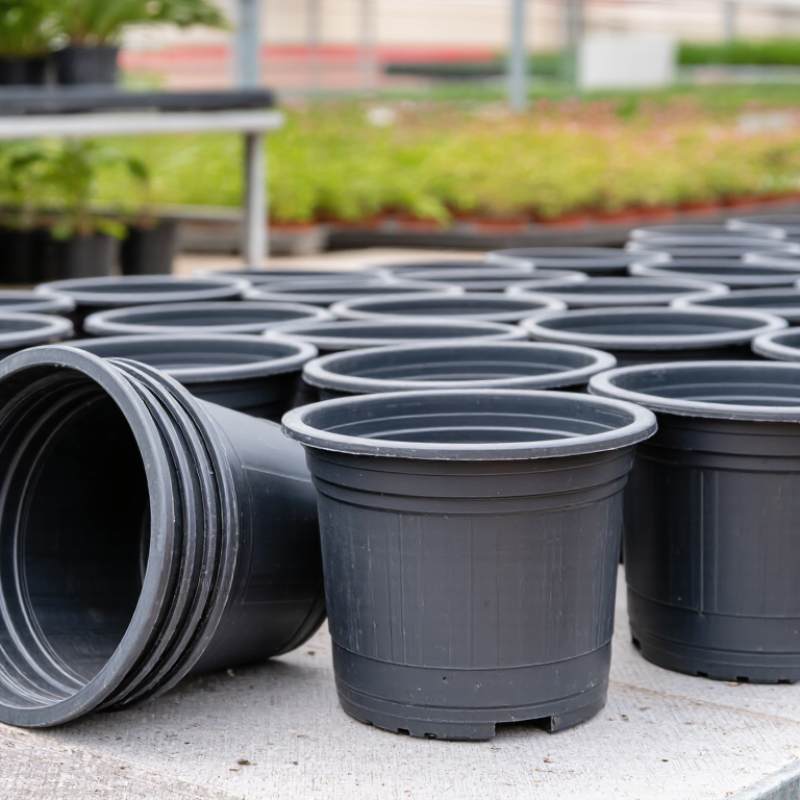
A round plastic nursery pot is defined by more than its circular opening. It has a round rim, a generally tapered body, and a base shaped to support drainage and handling. Most are made from rigid nursery-grade plastic, commonly polypropylene or polyethylene. Exact resin and wall thickness vary by product. Buyers should check the specification sheet rather than assume every black pot is identical.
Dimensions usually list top diameter and pot height, but stated volume can vary between suppliers. That matters. A wider rim, drainage holes, and small feet or base channels affect filling, airflow, and water release. USDA NASS reported $13.8 billion in U.S. horticultural sales in its 2019 Census of Horticultural Specialties, a measure of the sector where these containers serve growers. For wholesale orders, compare usable capacity, wall rigidity, nesting fit, and drainage-hole layout. Thin walls may reduce shipping weight, yet can flex during filling or transport. There is no single ideal thickness; crop size, growing cycle, and handling equipment all change the right choice.
Common Materials, Designs, and Growing Features
Round nursery pots are commonly molded from polypropylene or polyethylene, materials valued for low weight and practical handling. Polypropylene can offer a firmer wall, while polyethylene may tolerate flexing during stacking and transport. Actual performance depends on wall thickness, resin blend, and exposure to sun and heat. For outdoor use, ask suppliers about UV stabilization and test a sample through a growing season. A label alone is not enough. Some wholesale buyers also consider recycled content, but color and stiffness can vary between batches. That is worth checking.
Round walls support consistent spacing and easy rotation. They can use bench space less efficiently than square pots. Drainage holes should release excess water without letting growing media wash out. Raised feet can keep holes clear on flat surfaces. Molded ribs add stiffness and may guide root growth, but their value depends on crop and container size. Not every crop needs the same depth. For young ornamentals, a wider, shallower profile may work; deeper-rooted plants often need more vertical room. Check the fit. A rolled rim helps workers lift filled pots and can improve nesting when empty. Still, tight nesting sometimes slows unpacking. Request samples with the exact diameter, depth, drainage pattern, and wall weight planned for purchase. Then trial them with your own growing media and watering schedule.
How Pot Size and Drainage Affect Plant Health
For wholesale buyers, pot size is more than a shipping specification. It influences how quickly growing media dries and how much room roots have to spread. A pot that is too small can crowd roots and dry out fast, especially on warm, breezy benches. Too large can hold wet media around a young root system for longer than the plant can use it. That is not ideal.
Match the pot to the plant’s current root ball, not its hoped-for size months later. For example, a small seedling placed in a deep, oversized container may use only the top layer of media at first. The lower portion can stay damp. Check crop type, growth stage, and watering routine before settling on dimensions; there is no single size that suits every nursery schedule.
Drainage matters just as much. Open, evenly spaced holes let excess water escape and help reduce prolonged saturation near the roots. But holes alone cannot fix compacted media or a pot left standing in runoff. During sample testing, water a filled pot and watch how quickly it drains, then inspect the media again the next day. Small details count. Hole placement, rim shape, and consistent dimensions can affect stacking and watering across a large order. Even careful tests have limits: greenhouse temperature and airflow may change the result.
2026 Best Round Plastic Nursery Pot for Wholesale Buyers? - How Pot Size and Drainage Affect Plant Health | Nominal Pot Size | Approx. Top Diameter × Depth | Approx. Capacity | Typical Use | Drainage and Plant-Health Considerations | Wholesale Buying Check |
| 4 in (10 cm) | About 4 × 3.5 in
(10 × 9 cm) | About 0.5 L | Seedlings, cuttings, and small starts | Small soil volume can dry quickly. Keep drainage openings clear and check moisture more often in warm or windy conditions. | Confirm the usable internal width and that trays or carriers fit the pot base. |
| 6 in (15 cm) | About 6 × 5 in
(15 × 13 cm) | About 1.4 L | Herbs, young annuals, and rooted plants | A well-drained growing mix and open base holes help prevent water from remaining around roots after irrigation. | Check rim strength and consistent dimensions for stacking and automated handling. |
| 8 in (20 cm) | About 8 × 6.5 in
(20 × 16.5 cm) | About 3.1 L | Established perennials and compact foliage plants | Choose a pot that leaves room for root growth without greatly exceeding the root ball; excess wet mix can stay moist longer than the plant needs. | Request samples to check wall flexibility, base stability, and drainage-hole finish. |
| 10 in (25 cm) | About 10 × 8 in
(25 × 20 cm) | About 6.3 L | Larger perennials, shrubs, and patio plants | Larger containers hold more water. Adequate drainage and a suitable substrate are important; avoid leaving the pot standing in collected runoff. | Compare loaded-pot handling needs, pallet packing, and nested-stack height. |
| 12 in (30 cm) | About 12 × 9.5 in
(30 × 24 cm) | About 10.8 L | Large shrubs and advanced nursery stock | Check that water can drain freely from the base. For deep containers, match irrigation frequency to the crop and growing medium. | Verify dimensions, material specification, and transport durability with a production sample. |
Note: Dimensions and capacities are approximate examples for tapered round nursery pots; actual measurements vary by mold and supplier. Drainage-hole design is not standardized, so confirm the pot’s specifications and suitability for the intended crop and growing medium.
Key Criteria for Comparing Wholesale Nursery Pots
For wholesale buyers, compare round plastic nursery pots by usable volume, not rim diameter alone. Two pots with similar openings may hold different amounts of growing media. Check the inside depth and base width against the plants you intend to ship. Consistent dimensions help with filling, spacing, and fitting pots into trays.
Material matters. Ask for the resin type, wall thickness, and details about UV resistance if pots will sit outdoors. Press the sidewalls and inspect the rim; weak spots can split during handling. Drainage holes should release excess water without spilling soil too easily. A trade-off is easy to miss: thicker walls may last longer, but they can add shipping weight.
Tips: Request samples from more than one production batch. Measure a few pots, stack them, and check whether they separate without tugging. Confirm carton quantity and packed dimensions before comparing freight costs. Small differences add up.
Also compare nesting efficiency and the space needed for storage. Slightly tapered pots usually stack more neatly, but overly tight nesting slows unpacking. Ask suppliers how they check dimensions and reject defects. A clear inspection process is more useful than a vague promise of uniform quality. Keep a simple record of sample measurements; it may reveal inconsistencies you would otherwise overlook.
2026 Sourcing Considerations for Wholesale Buyers
For wholesale buyers, a round plastic nursery pot should be judged by more than its listed diameter. Check the rim width, internal depth, drainage-hole pattern, and wall thickness against the plants and growing mix you actually use. Small differences can affect tray fit and watering.
Fit matters. Ask for a sample from the intended production specification, then fill it with damp substrate and lift it repeatedly. Thin walls may flex under load, even when an empty pot looks sturdy. Also confirm whether pots nest cleanly; a stack that sticks can slow packing and take up extra warehouse space.
Before placing a large order, request written details on material, color consistency, unit weight, carton count, and production lead time. If outdoor use is expected, ask how the material is selected for sunlight exposure, and test samples under your own conditions. Do not assume every recycled-content option behaves identically. Compare pallet dimensions and estimated freight, not only the per-pot price.
Test real plants. A spreadsheet can look tidy; a trial run may reveal awkward drainage or labels that peel when wet. That gap is worth taking seriously. Confirm defect handling and acceptable dimensional variation in writing, while recognizing that samples cannot predict every batch difference.