Staverton is a British designer & manufacturer of contemporary office furniture.
Call us today: +44 (0)20 3794 1200
©2025 Staverton (UK) Ltd | Terms | Disclaimer | Cookies | Privacy

![]()
Choosing the best Door Stopper for 2026 starts with the door, the floor, and the way a room is used. A rubber wedge that grips a tiled kitchen floor may slide on polished wood. A low-profile model might fit beneath a tight door, while a magnetic stopper can keep a frequently used door open without sitting underfoot. Small differences matter.
This guide compares common styles, including wedges, magnetic stops, and fixed floor or wall models. It looks at grip, durability, clearance, installation, and how easily each option fits daily routines. A practical choice should hold the door without scratching nearby surfaces or creating an awkward trip point. Check the door’s weight and gap before buying. Measure twice, if you can.
There is no single best pick for every home. That is easy to say, less easy to apply. Household floors, pets, children, and ventilation needs can change what works. The recommendations ahead focus on useful trade-offs rather than promising a perfect product. A stopper that seems sturdy in a product photo may behave differently on a dusty floor or under a heavier door. Keep that in mind. The goal is a reliable match for your space, not just another small accessory in a drawer.
A door stopper controls a door’s movement by resisting its swing or limiting how far it can open. It can keep a door from slamming in a draft, striking a wall, or closing while someone carries groceries through. The basic idea is simple: create enough friction or a physical barrier to hold the door in place. Small detail, useful every day.
A wedge-shaped stopper slides beneath the door. Its sloped surface presses against the door’s lower edge, while friction with the floor helps keep it from moving. It works best on a firm, reasonably level surface; a thick carpet or a large gap can reduce its grip. Floor-mounted models work differently. They sit in the door’s path and absorb contact, while some magnetic designs catch a metal plate and hold the door open. Each type depends on correct placement and a door that meets it at the right height.
To choose one, check the gap beneath the door, the floor material, and how much force the door usually carries. A light interior door may need only a rubber wedge. A heavy entry door can push a small stopper aside, especially in a strong breeze. Test the fit by opening and releasing the door gently. If it creeps forward, reposition the stopper or try a design with better floor contact. Even a good stopper can shift over time. That part is easy to miss.
Door stoppers come in several practical styles, and the right choice depends on the door, floor, and how often it moves. A wedge stopper slides beneath the door and works well on smooth floors. Rubber or silicone versions grip better than hard plastic, though thick carpets may make them difficult to position. Simple, but useful. I’ve found that a wedge can also wander under repeated use, so check its grip before relying on it near a drafty window.
Hinge-pin stoppers attach near a door’s hinges and limit how far it swings. They need no floor drilling, but may not suit every hinge or heavy door. Floor-mounted and wall-mounted stops offer a fixed stopping point; a cushioned tip helps prevent dents and scuffs. Magnetic models hold a door open until released, while kick-down stops can be lowered with a foot and lifted again by hand. Spring-style stops bend on impact, but their small rubber tips can leave marks over time. Measure the door’s swing and consider nearby furniture before choosing. The obvious fit is not always the best one.
The best door stopper for 2026 depends on the floor, door, and installation you can manage. A rubber wedge is light, quiet, and easy to move between rooms. On smooth tile, though, a soft wedge may slide when a heavy door pushes against it. Look for a broad contact surface and firm, textured rubber. Grip matters most. A dense rubber model can hold well on hard floors, while a cork or felt base may suit delicate wood better. Metal stops are sturdy, but exposed edges can mark a door or floor if they strike repeatedly.
Check how the stopper meets the door, not just its listed material. A wedge should sit snugly under the door without needing a hard kick. For a wall-mounted stop, measure the door’s swing and choose a position that prevents the handle from hitting the wall. Installation takes more care. A screw-mounted stop can be dependable, but drilling into tile or finished flooring is difficult to undo. Adhesive models avoid holes, yet dust, uneven surfaces, and frequent impacts can weaken their hold.
A simple test helps: place the stop, open the door slowly, then apply gentle pressure. Watch for slipping, wobbling, or a sharp bump. Not every floor behaves the same. I would not assume a stopper that works on one surface will work in every room. Check the door’s weight, nearby trim, and whether the stop must be moved often before choosing.
| Door Stopper Type | Common Materials | Grip and Holding Method | Installation | Best Suited For | Main Considerations |
|---|---|---|---|---|---|
| Wedge | Rubber, silicone, or wood with a non-slip base | Uses friction between the wedge and floor; grip depends on the floor surface and wedge material. | No permanent installation; slide it under the door by hand. | Flexible, temporary use on many types of doors. | May slip on dusty, wet, or very smooth floors. The door must have enough clearance beneath it. |
| Spring door stop | Metal coil spring with a rubber tip; usually mounted to a wall or baseboard | Absorbs some impact and limits the door’s swing; it does not normally hold the door open. | Screws into a wall, baseboard, or floor, depending on the model. | Protecting walls from a door handle or door edge. | Needs a suitable mounting surface. It may not prevent the door from moving or staying open. |
| Magnetic door stop | Metal housing with a magnet and a metal strike plate | A magnet holds the door against the stop when the door and stop are aligned. | Typically screw-mounted to the floor, wall, or baseboard, with a matching plate attached to the door. | Holding a door open at a consistent position. | Requires accurate alignment and a secure mounting surface. Holding strength varies by design. |
| Hinge-pin door stop | Metal arms with rubber contact tips | Adjustable arms limit the door’s opening angle by contacting the door and frame. | Fits onto a compatible door hinge pin; usually requires removing and replacing the pin. | Limiting swing without drilling into the wall or floor. | Compatibility depends on hinge type and pin size. Concentrated contact can mark a door or trim if not adjusted properly. |
| Freestanding weighted stop | Metal, rubber, or fabric-covered body, often with a weighted core | Weight and a non-slip base resist movement; performance depends on the door’s force and the floor’s grip. | No installation; place it on the floor near the door. | Situations where drilling or permanent fittings are not wanted. | Can be moved or knocked out of position. Check that the base grips the floor and that the stop is heavy enough for the door. |
| Floor-mounted stop | Metal or rigid plastic body, often with a rubber bumper | Stops the door by providing a fixed contact point; it may protect the door or nearby wall. | Screws into the floor; placement should be checked against the door’s swing path. | Long-term use where a fixed stop is preferred. | Requires drilling and a suitable floor. Incorrect placement can leave the door handle or wall unprotected. |
| Wall-mounted stop | Metal or plastic housing with a rubber or silicone bumper | Cushions the door at a fixed point on the wall; it generally limits impact rather than holding the door open. | Screws into a wall or baseboard, ideally into a stud or suitable anchor. | Protecting walls in a known door-swing location. | Correct placement matters. A weak fixing or unsuitable wall anchor may loosen under repeated impact. |
Choosing a door stopper starts with the door, floor, and daily traffic. For a lightweight interior door on tile or hardwood, a rubber wedge can hold firmly without scratching the finish. Check that it grips when the floor is slightly dusty; a stopper that slides during a breeze is more nuisance than help. On thick carpet, a low wedge may disappear under the door. A taller, heavier model usually works better. Test the clearance before buying.
Room conditions matter, too. In a bathroom or laundry area, choose a material that tolerates damp floors and is easy to wipe clean. For a narrow hallway, a wall-mounted stop can keep an obstacle off the walking path, but place it where the handle will not hit the wall first. Heavy doors may need a floor-mounted stop, secured to a suitable surface. Check the floor beneath before drilling.
Small details count. A soft contact pad can reduce knocks and dents, while a loose, hard stop may mark painted trim. I still misjudge door clearance sometimes, especially with thick rugs. Measure twice. If several people use the room, test the stopper with the door opened at its usual angle. A solution that works for one person may be awkward for someone carrying laundry or groceries.
What Is the Best Door Stopper for 2026?
A door stopper works best when its style suits the door, floor, and amount of traffic. Before installing one, check how far the door swings and where its handle might hit the wall. A floor-mounted model may suit a solid floor, while a wall-mounted stopper can keep walkways clear. For lightweight doors, a hinge-pin stopper may be enough. There is no single best option for every home.
Install it with the door held open at the desired stopping point. Mark the position, then check that the stopper will protect the handle without blocking a path. If drilling, inspect the area for hidden pipes or wiring, and use a fastener suited to the floor or wall material. Not sure what lies behind the surface? Pause and check before drilling. For adhesive models, clean and dry the surface, then follow the product’s curing instructions. I once placed a stopper too close to the door; it stopped the swing, but the handle still touched the wall. A second measurement would have helped.
Keep it simple. Check the stopper regularly for loose screws, cracked rubber, or worn adhesive. Tighten or replace parts when needed, and wipe away grit that could scratch floors. Test the door gently after maintenance. If the stopper shifts, catches a foot, or no longer holds the door reliably, reposition or replace it. Small details matter.
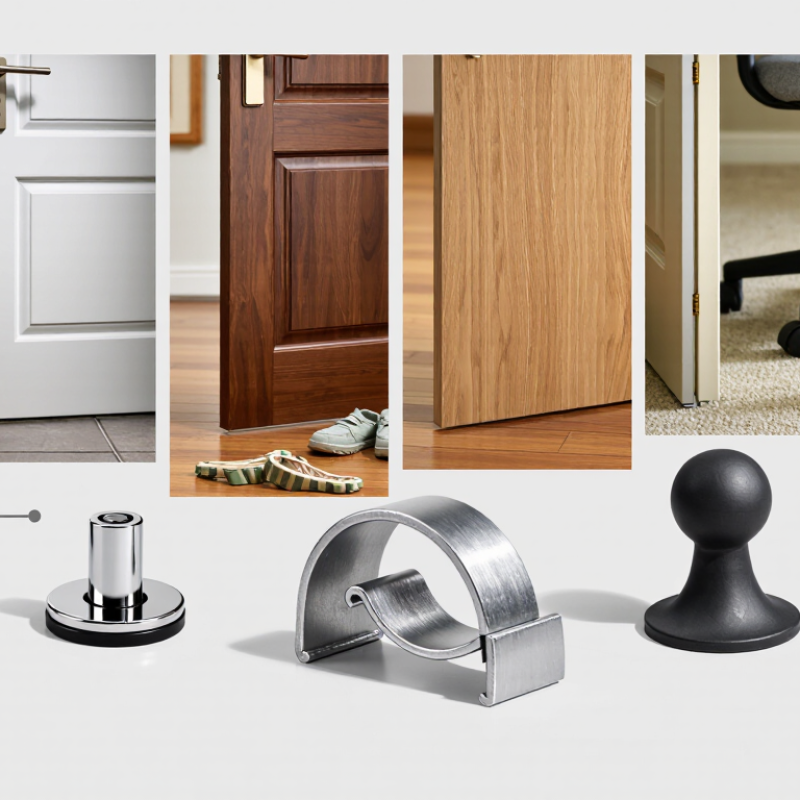
These examples show common configurations: adhesive and hinge-pin stops typically need no added screws, while screw-mounted wall and floor stops commonly use one. Actual hardware varies by model and surface. Before installing, check for hidden wiring or pipes, use suitable fixings, and inspect the stopper periodically for looseness or damage.
Staverton is a British designer & manufacturer of contemporary office furniture.
Call us today: +44 (0)20 3794 1200
©2025 Staverton (UK) Ltd | Terms | Disclaimer | Cookies | Privacy

![]()
Please enter your details below to access the design files.