
Staverton is a British designer & manufacturer of contemporary office furniture.
Call us today: +44 (0)20 3794 1200
©2025 Staverton (UK) Ltd | Terms | Disclaimer | Cookies | Privacy


Choosing an Aluminum Extrusion Profile supplier in 2026 is about more than finding the lowest quoted price. Buyers need a partner whose capabilities match the design, production volume, and delivery schedule. A profile that looks simple on a drawing can be difficult to manufacture when wall thickness, alloy, temper, finish, and tolerances meet tooling limits. Small details matter. Compare more than catalogs and price sheets. Ask how suppliers review drawings, develop dies, inspect samples, and control dimensions during production. Request material and inspection records tied to the actual order, rather than relying on a generic brochure. These checks cannot guarantee a flawless shipment, but they can reveal risks before they become costly delays.
This guide examines practical supplier criteria, including manufacturing experience, engineering support, quality controls, production capacity, communication, and delivery performance. Not just price. A supplier experienced with architectural sections may not be the right choice for a tight-tolerance industrial component. Review samples closely: look at cut ends, burrs, finish consistency, and packaging protection. Ask what happens when a sample misses a requirement, and how revisions are documented. A polished sales presentation is useful, but it is not proof of consistent production. That distinction is easy to overlook. The strongest choice depends on your application, and even a careful evaluation leaves some uncertainty. The aim here is to help buyers ask clearer questions and compare suppliers on evidence they can verify.
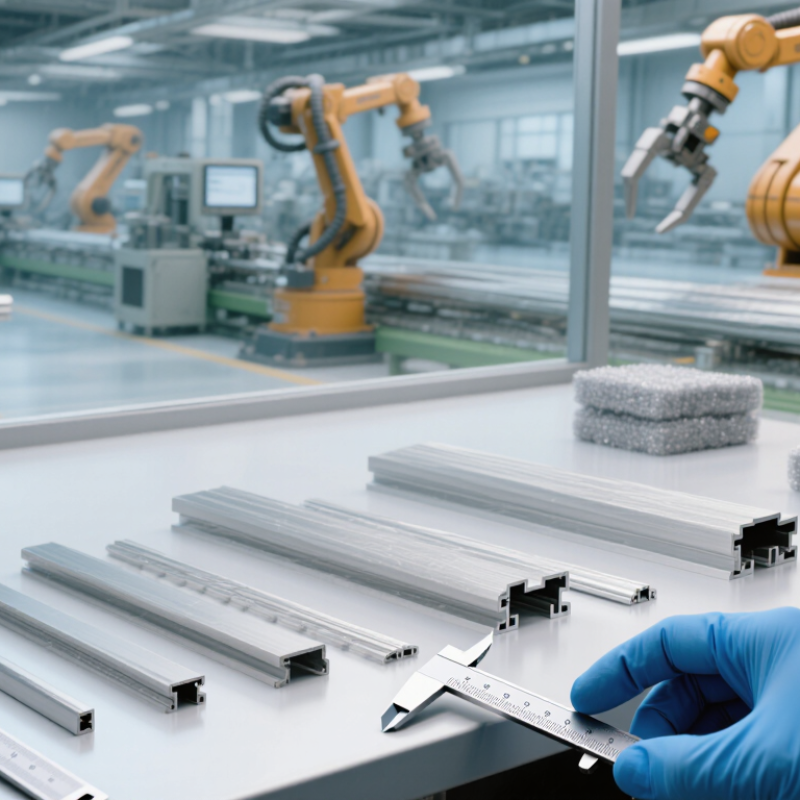
Aluminum extrusion profile suppliers provide more than shaped metal. They help buyers turn drawings into manufacturable sections. Typical services include alloy and temper selection, die design, extrusion, cutting, and surface finishing. Depending on the application, buyers may also request anodizing, powder coating, drilling, or machining. A supplier should explain tolerances, minimum order quantities, and lead times before production. Clear answers matter. A thin wall or deep channel can affect strength, straightness, and cost. Requesting a sample or first-article inspection can reveal fit issues before a full order moves forward.
Reliable suppliers can provide dimensional drawings, material specifications, and inspection records. Ask how they control dimensions, finish consistency, and packaging. Long profiles, for example, may need separators to prevent scratches during shipping. Machined ends may need protection from dents. Some suppliers can assemble parts or coordinate additional operations, but confirm which steps they perform themselves. Details get missed. A quote may exclude tooling, finishing, or freight, so compare the included services, not just the price. Share the expected loads, operating environment, and connecting parts; otherwise, a well-made profile may still fail to fit. Supplier capabilities vary, so check assumptions against samples and written specifications.
| Supply Area | What Buyers Can Request | Common Options or Examples | What to Confirm Before Ordering |
|---|---|---|---|
| Profile design and engineering | Design review, manufacturability feedback, section drawings, and support with profile specifications. | Custom solid, hollow, and semi-hollow sections; revisions to wall thickness, radii, and geometry. | Provide a dimensioned drawing or CAD file, intended use, critical dimensions, and any design constraints. |
| Alloy and temper selection | Material recommendations and supply to an agreed alloy and temper specification. | Common extrusion alloys include 6063 and 6061; tempers may include T5 and T6, depending on alloy and processing. | Confirm the required alloy, temper, mechanical properties, applicable specification, and certificate requirements. |
| Dies and tooling | New or existing die assessment, tooling manufacture, and sample profiles for approval. | Custom dies are generally designed around the requested section and the supplier’s press and tooling capabilities. | Ask about tooling ownership, tooling charges, maintenance, sample approval, and what happens if the design changes. |
| Dimensional control | Inspection against the drawing and an agreed dimensional tolerance plan. | Profile tolerances depend on dimensions, geometry, alloy, temper, and the applicable standard or order specification. | Identify critical-to-function dimensions and agree on inspection methods and acceptance criteria in writing. |
| Surface finishing | As-extruded supply or additional surface treatment, where available. | Options may include anodizing, powder coating, polishing, or mechanical finishing. | Specify finish type, color, appearance, coating requirements, and any relevant test or inspection criteria. |
| Cutting and fabrication | Secondary processing to reduce buyer-side operations. | Depending on equipment and scope: cut-to-length, drilling, punching, CNC machining, tapping, or assembly. | Share tolerances, feature locations, deburring needs, surface-protection requirements, and sample expectations. |
| Quality records and traceability | Inspection records and material documentation as agreed for the order. | Possible documents include material test certificates, dimensional reports, and batch or lot traceability records. | State required documents, inspection frequency, traceability level, and any third-party inspection needs. |
| Packaging and delivery | Packaging and shipment planning tailored to profile length, finish, and transport method. | Options may include protective film, separators, bundles, crates, or other agreed protective packaging. | Confirm pack quantities, maximum lengths, labeling, delivery terms, lead time, and destination requirements. |
| Commercial planning | Quotation details covering production scope, order quantities, tooling, and delivery assumptions. | Pricing and lead times can vary with alloy, profile complexity, finish, fabrication, quantity, and shipping. | Request a written quotation that separates tooling, unit pricing, minimum order quantities, and recurring charges. |
Capabilities, tolerances, documentation, minimum quantities, and lead times vary by supplier and project. Confirm requirements against the supplier’s written quotation and the applicable product specification.
Staverton is a British designer & manufacturer of contemporary office furniture.
Call us today: +44 (0)20 3794 1200
©2025 Staverton (UK) Ltd | Terms | Disclaimer | Cookies | Privacy